Bali Waterfalls: The Complete Island Guide

Bali waterfalls number in the dozens, and this guide covers roughly 30 named ones, from Gianyar's stepped cascades to the jungle valleys of Buleleng in the north. Every fall gets its region, entry fee, swim note and any caution you should know before going. If Ubud is your base, compare Bali waterfall tours Ubud before you plan the days.
Quick answer
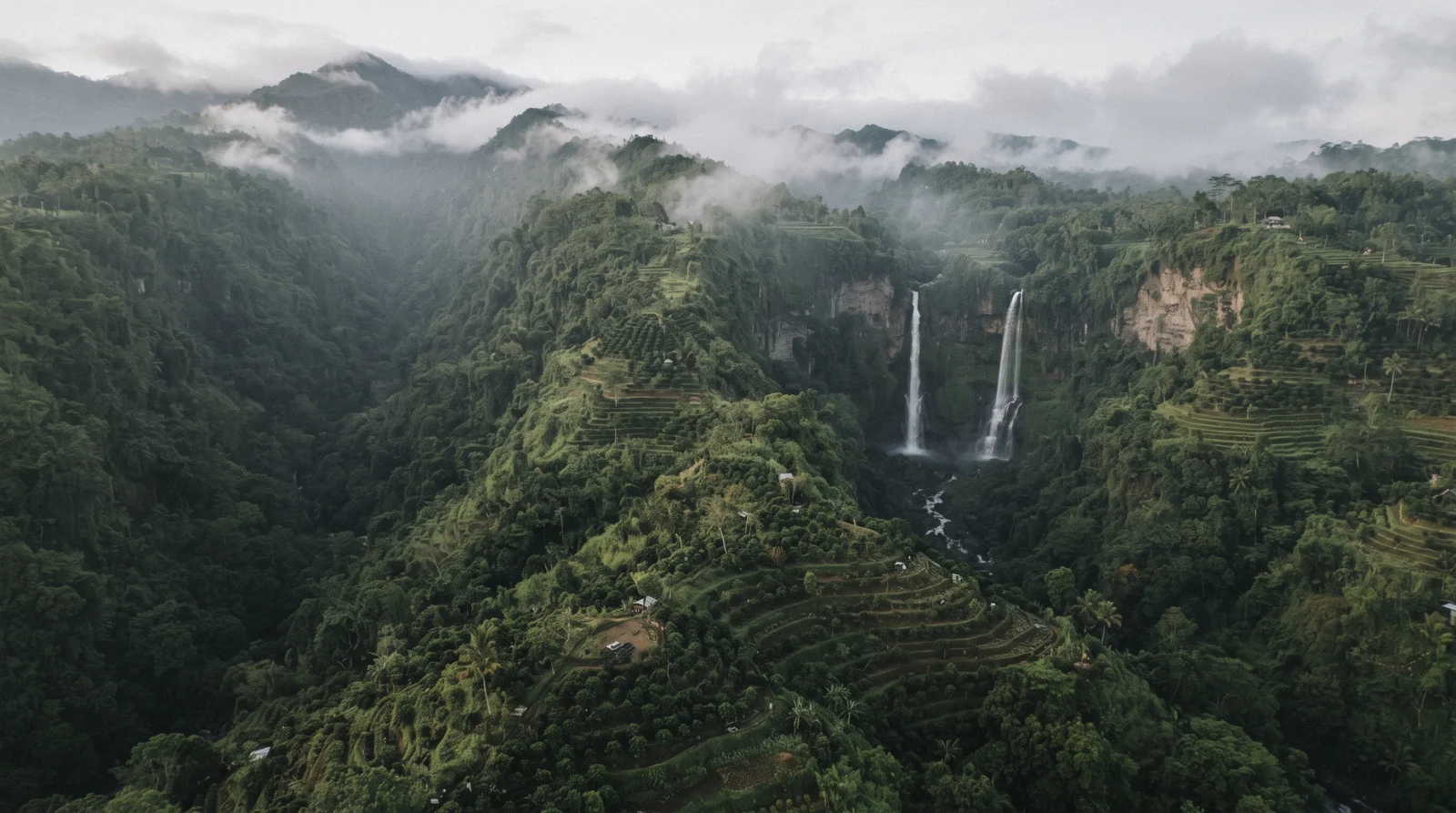
Bali has dozens of waterfalls. This guide covers roughly 30 named ones across Gianyar, Bangli, Tabanan, Badung, Buleleng and East Bali, which is not an exhaustive island count because Bali holds many more unnamed or seasonal cascades. The most famous waterfall in Bali is Tegenungan Waterfall, the wide high-volume fall closest to Ubud. The tallest commonly cited is Sekumpul in North Bali at roughly 80m, though read the guide-fee caution before you commit. For a first visit from Ubud, Tibumana Waterfall and Tukad Cepung Waterfall pair well in a single day.
Key takeaways
- Tegenungan near Ubud is the most famous fall in Bali
- Sekumpul in North Bali is commonly cited as the tallest at roughly 80m
- Kanto Lampo and Tukad Cepung are wading falls, not swimming falls
- Banyumala Twin in Wanagiri is one of the best swimming falls at 50,000 IDR entry
- See Bali waterfalls near Ubud for the closest falls to town
- Sekumpul needs a full day from Ubud and a caution read first
Seeing Bali's Waterfalls With a Tour or Independently
This page is an island-wide inventory, so most of the falls here sit well beyond Ubud and a tour earns its fee the moment the driving gets long. Sekumpul is roughly 1.5-2 hours from Ubud and the access rules there are contested, which makes the Sekumpul, Banyumala Twin Falls and Jatiluwih day the low-friction way to see the valley from its viewpoint without trekking down into the fee dispute. Nungnung means a 400-500 step return climb, so having a car waiting afterwards is worth real money, and the Leke Leke and Nungnung day stacks two big falls with the Jatiluwih terraces. The Aling-Aling slides and cliff jumps should never be done without a guide and safety gear, which is exactly what the Aling-Aling cliff jumping and natural water slide day includes. For the four Ubud-area falls, a shorter option such as the Ubud spectacular waterfalls tour covers Tukad Cepung, Tibumana and Kanto Lampo in one 8-hour day. For a fall-by-fall price comparison of the Ubud-area sites, use our homepage.
 from $29
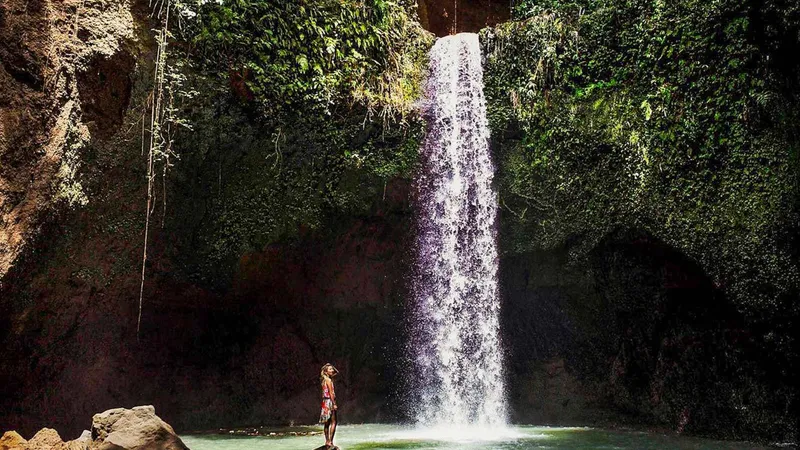
Ubud: Spectacular Waterfalls Tour
One day, three of the waterfalls people actually come to Ubud for: Tibumana, Tukad Cepung and Kanto Lampo. A driver-guide handles the roads between them, so the day…
- Tukad Cepung, where the light drops into the cave through a gap in the rock
- Tibumana, a single curtain fall with a pool calm enough to swim in
- Kanto Lampo, the tiered cascade that runs straight down the rock face
- Air-conditioned car and pickup from the Ubud area
 from $34
Bali: Sekumpul, Banyumala Twin Falls & Jatiluwih UNESCO Tour
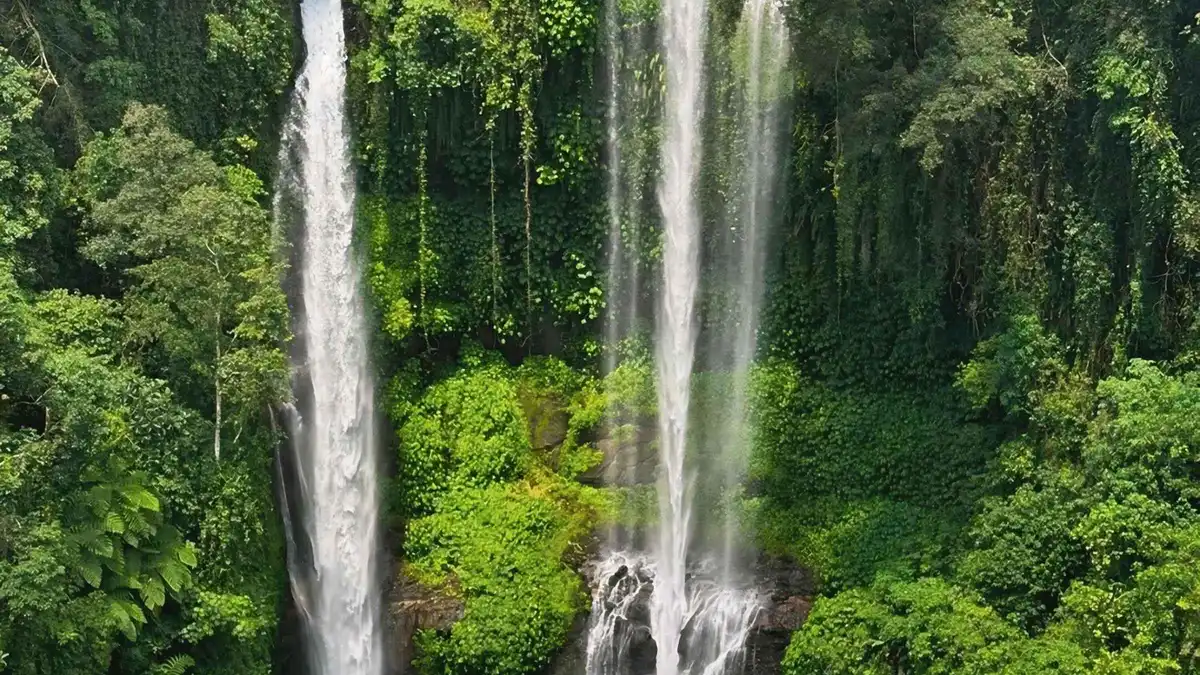
A North Bali day that sees Sekumpul from its viewpoint rather than trekking down, then swims at the Banyumala twin falls and ends on the Jatiluwih rice terraces…
- Sekumpul from the viewpoint, no trek down to the base
- A swim under the Banyumala twin waterfall
- The Jatiluwih rice terraces
- Hotel pickup with a driver-guide
 from $34
Bali: Leke-Leke, Nungnung, Goa Gong & Jatiluwih Tour
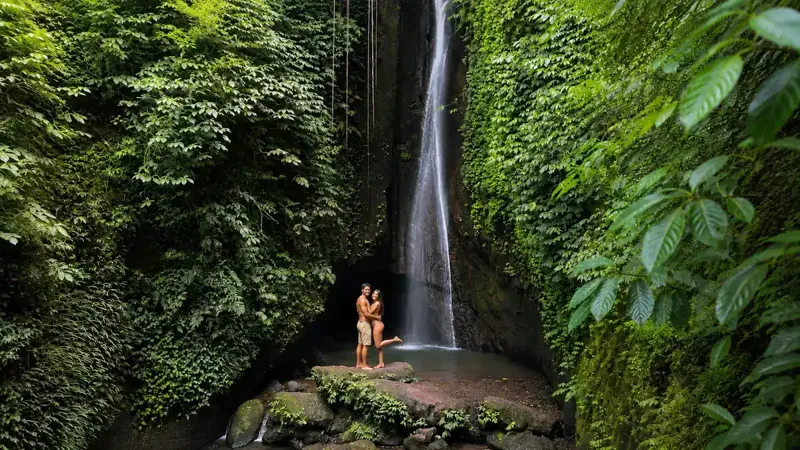
Two of the big falls north of Ubud in one private day: the long stair descent to Nungnung, the cave-like Goa Gong, the Leke Leke gorge, then the…
- Nungnung, down the long stairway to the base
- Goa Gong, a waterfall inside a rock hollow
- Leke Leke in its jungle gorge
- Jatiluwih rice terraces
 from $64
Aling-Aling Waterfall Cliff Jumping & Natural Water Slide
A full private day to Aling-Aling with the jumps and slides at Kroya, Kembar and Aling-Aling, equipment and insurance, lunch, and the Handara gate on the way.
- Jumping and sliding at Kroya, Kembar and Aling-Aling
- Guide, equipment and insurance
- Indonesian lunch
- Private car with pickup
How This List Is Organized
The Honest Count and the Method
This is not a claim that Bali holds exactly 30 waterfalls. The island has dozens more small, seasonal or unnamed cascades that no guide lists, and any page promising a complete count is overselling. What this guide does is cover roughly 30 named falls across the regencies that actually hold them: Gianyar, Bangli, Tabanan, Badung, Buleleng and East Bali.
Every fee, height and drive time here comes from sources we could check, and where those sources disagree we say so. Falls marked as verified have their figures confirmed against more than one source. Falls reported by a single source carry a note to verify locally at the ticket booth, because rural entrance fees in Bali change without notice.
How to Use the Regions
The falls are grouped by regency rather than ranked, because ranking a 3m swimming pool against an 80m canyon tells you nothing about which one fits your day. Start from where you sleep. From Ubud, the Gianyar and Bangli falls are half-day trips and the north is a full-day commitment. From Bedugul or Munduk, the Wanagiri and Munduk clusters are on your doorstep.
One clarification before you start planning: Tumpak Sewu appears in many search results for Bali waterfalls, but it sits in East Java, not Bali. Reaching it means an island crossing and a multi-day trip. It is not covered here and should not be built into any Bali itinerary.
Ubud and Gianyar Waterfalls: The Closest to Town
The Four We Cover in Depth
Tegenungan Waterfall sits in Gianyar Regency, about 20-30 minutes from Ubud, with entry at IDR 20,000 cash per person, free parking and a 150-170 step descent into a wide swimmable pool. Tibumana Waterfall lies east of Ubud, a single curtain fall into a calm swimmable pool with a lifeguard on duty, entry around 25,000 IDR cash and a 10-15 minute walk in. Kanto Lampo Waterfall charges IDR 25,000 for its wide tiered rock-face cascade, wading only. Tukad Cepung Waterfall in Bangli costs 30,000 IDR and puts a light beam into its canyon around 9-11am.
Each of these four has its own full page on this site, and our homepage owns the Ubud day-trip comparison, so read those rather than a rewrite here. Start at Tegenungan, then Tibumana, Kanto Lampo and Tukad Cepung. For falls without their own page here, the figures were compared against Bali Untold and Jared's Detours in particular.
Suwat, Sumampan, Taman Sari and Tegalalang
Suwat Waterfall is one of the closest falls to Ubud proper, a small cascade into a 3-metre-deep pool, which makes it one of the few Bali falls deep enough for a proper swim. Entry is 40,000 IDR and the walk down the staircase takes about 10 minutes.
Sumampan Waterfall sits southeast of Ubud in an old quarry. Entry is 20,000 IDR and access means about 50 uneven stone steps plus a knee-to-thigh-deep river wade using a guide rope. Swimming is possible.
Taman Sari Waterfall in Gianyar is a two-tiered fall into a large swimming hole, 20,000 IDR and a short easy path.
Tegalalang hides a smaller waterfall inside the Tegalalang Rice Terraces near Ubud. It is not a standalone attraction, the fee is bundled with terrace entry anywhere from free to 50,000 IDR depending on where and when you enter, and there is no swimming.
Bangli Waterfalls: Tukad Cepung's Canyon Country
Goa Raja, Next Door to Tukad Cepung
Goa Raja sits in Tembuku, Bangli Regency, right by Tukad Cepung, and it deserves more attention than it gets. The site holds a waterfall inside a giant stone cave, plus a second spring-fed waterfall pouring into a manmade pool outside. Entry is 25,000 IDR and swimming is allowed in that manmade pool. The hike is easy, though the steps down are steep.
Because it shares the same canyon country as Tukad Cepung, the same wet-season logic applies. Canyon and gorge sites in this part of Bangli can close in heavy rain, so check conditions before you drive out. The two sites pair naturally in one morning, since you are already on the same road.
We do not yet have a full page for Goa Raja, so treat the figures here as reported by a single source and confirm the fee at the gate. It is one of the clearest gaps in our own coverage and one we plan to close.
Tabanan Waterfalls: Leke Leke and the Blahmantung Cluster
Leke Leke Waterfall
Leke Leke Waterfall lies in Tabanan Regency, between Ubud and Bedugul, and its 50,000 IDR entry fee is one of the most consistently reported figures on this page. Three independent sources all cite the same amount. The fall itself is a tall narrow curtain dropping into a swimmable base pool, reached by a 15-20 minute walk down a staircase through a jungle gorge. The entrance area has the photo swings Bali is known for.
Driving from Ubud takes roughly 45 minutes to 1 hour, which makes it an easy half-day on the Bedugul road, and it combines well with the Wanagiri falls further north. Because the walk is short and the pool is genuinely swimmable, it suits mixed groups and families better than the stair-heavy north Bali treks. See our Leke Leke page for the full breakdown, and note the tour option in the conversion section below that pairs it with Nungnung.
Blahmantung and Bidadari
Blahmantung Waterfall, also called Rajapala Waterfall, sits deeper into Tabanan Regency, off the beaten path and close to Bidadari Waterfall. This is the one entry on this page where we would tell you to distrust the headline number. The operator reports a 50m drop, while other claims run up to 100m, and the source that carries the 50m figure itself flags the height as disputed. Treat it as roughly 50m or more, not a confirmed measurement.
No entry fee or swim condition has been sourced for either fall, so plan to pay something small in cash and ask locally. That is not a weakness of the falls, it is simply what off-the-beaten-path means in rural Tabanan. Go for the quiet and the unmanaged trail, not for facilities, and carry your own water.
Badung and Petang Waterfalls: Nungnung and Taman Beji Griya
Nungnung Waterfall
Nungnung, in Petang, Badung Regency, is one of Bali's tallest single-drop waterfalls, and even its basic stats refuse to agree. Height is reported as 50m by one source and 35-40m by another, so call it roughly 35-50m depending on the source. The stair count splits the same way, 500 steps versus 428, so plan for around 400-500 steps each way. Entry is 20,000 IDR.
The pool at the base is too shallow to swim, so this is a wading and splash-pool fall, and the drop throws heavy mist that soaks you before you reach the bottom. Drive time from the Ubud area is roughly 1 hour. Do the climb early, because those stairs in midday heat are punishing, and remember the return leg is all upward. This is a leg-day fall, and a rewarding one. There is no page on this site yet, so verify the fee at the gate.
Taman Beji Griya
Taman Beji Griya, west of Ubud in Badung Regency, is not a sightseeing waterfall in the usual sense and no longer pretends to be. It is a holy-spring purification site, a melukat, and by the most recent reports entry is only available by taking part in a guided purification ceremony. Casual walk-up viewing is reportedly no longer offered, and there is no swimming.
The price is a genuine conflict. One source cites 200,000 IDR while the more recent source cites 300,000 IDR for entrance plus the ceremony, so budget roughly 200,000-300,000 IDR and expect the figure to keep rising. If your interest is the ceremony rather than the waterfall, that price buys a guided religious experience with an officiant, which is a different purchase from a 20,000 IDR cascade visit. Go with respect, modest clothing and a guide who explains the ritual. If you only want a waterfall, spend your day elsewhere.
North Bali: Sekumpul, Fiji and the Hidden Waterfall
Sekumpul Waterfall
Sekumpul, in Buleleng Regency, is commonly cited as Bali's tallest waterfall at roughly 80m, with one source claiming up to 100m. It is not a single fall but multiple streams cascading down the Sekumpul valley, locally described as a group of 7. Swimming is possible in the base pool, reached by a steep 30-minute trek down into the valley. From Ubud, the drive is roughly 1.5-2 hours each way, so this is a full-day trip and an early start.
Before you plan it, read the next block carefully. The access situation here is the single most important caution on this page, and it changes the arithmetic of whether Sekumpul is worth the drive on any given trip. If you want the view without the dispute, the tour listed in our conversion section sees Sekumpul from its viewpoint without the descent.
The Guide-Fee Problem at Sekumpul
To descend to Sekumpul you will be charged a locally enforced guide fee, even though a guide is not officially required. Posted figures range from 125,000 IDR for guide access to Sekumpul plus the Hidden Waterfall, up to 200,000-250,000 IDR for a package that also includes Fiji Waterfall, and other reports cite a 150,000-250,000 IDR range.
The more serious issue is that the most recent reporting describes visitors being strong-armed into paying well above the posted rate. The Indonesian government has reportedly stepped in, but the practice continues. At least one source now actively advises against visiting until this is resolved. We present this as a live caution rather than a settled price list. If you go, agree the fee before descending, keep it in writing on your phone, and walk away if the number changes at the trailhead.
Fiji Waterfall and the Hidden Waterfall
Fiji Waterfall is a short hike from Sekumpul and is a 3-segment waterfall, usually visited as an add-on to a Sekumpul trip rather than as a standalone destination. That framing matters for your budget, because there is no independent fee for Fiji outside the combined Sekumpul package price above. If a local offers you Fiji as a separate paid trip, ask what the package already covers.
The Hidden Waterfall is the other name that comes up in the same valley, and it too is bundled into the upper tier of the guide-fee packages rather than sold on its own. The practical takeaway is simple. Decide in advance which combination you want, state it at the ticket point, and treat anything added afterwards as optional. The drives to this part of Buleleng are long enough that surprise fees sour an otherwise excellent day.
The Munduk Waterfall Trek
Four Falls, One Circuit
The Munduk waterfall trek in North Bali links four falls that competitors rightly treat as one route rather than four separate entries: Melanting, Labuan Kebo, Golden Valley and Red Coral. Walked as a full circuit it takes about 5-6 hours. If that is too much, Melanting and Labuan Kebo work together as a shorter alternative of around 2.5 hours.
Fees are per fall. Melanting and Labuan Kebo cost 20,000 IDR each, Red Coral costs 45,000 IDR, and Golden Valley is donation-based with no official fee. On swimming, the falls split: yes in the small pools along the river at Melanting, no at Labuan Kebo's main splash pool although the river below is swimmable, and no at Red Coral, whose base is shallow and rocky.
Melanting is the biggest and most powerful of the four and throws intense mist. Labuan Kebo has a wooden photo bridge. Golden Valley is a volcanic rock-face cascade with a clifftop eco cafe, and Red Coral is a tall single drop. Bring proper shoes, because this is a walking day, not a photo stop day.
Gitgit and the Sambangan Waterfalls
Gitgit and Colek Pamor
Gitgit Waterfall sits on the Singaraja-Bedugul road in North Bali and is one of the most accessible major waterfalls on the island, which is exactly why it draws steady crowds. Entry is 45,000 IDR and the path is a short 15-minute walk lined with vendor stalls. Height figures differ slightly between sources, 40m on one and 35m on another, so call it roughly 35-40m.
A smaller second waterfall, Colek Pamor at about 15m, sits a short walk further on and is noticeably quieter. If the main fall is busy, keep walking, because most visitors turn back at the first pool.
One honest flag on this region. Sambangan, the village area between Gitgit and Sekumpul, is sometimes marketed as a multi-waterfall trek, but it was not named in any of the sources behind this guide. No fee, route or waterfall count for Sambangan is sourced here, so verify locally in the village before committing to any package sold under that name.
Aling Aling and the Water Slides
The Aling Aling cluster, in Buleleng Regency, is four waterfalls at one site: the main Aling Aling fall plus Kroya, Kembar and Pucuk. What makes it different is what you can do there. Kroya, Kembar and Aling Aling have natural water slides and cliff jumps up to about 15m, while Pucuk requires wading a deeper river. Three of the four falls sit below roughly 400 well-paved steps.
The fee structure matters. Viewing only costs 20,000 IDR. Doing the slides and jumps costs 125,000 IDR or more, because it includes a guide and safety gear. Do not attempt the slides or jumps without that guide, whatever you see other visitors doing, since the rock surfaces and landing pools are not forgiving. If the jumps are the reason for your trip, see the guided Aling-Aling day tour in our conversion section, which covers equipment and insurance. This is also one of the rare Bali falls where paying more genuinely buys safety.
Banyumala and the Wanagiri Waterfall Cluster
Banyumala Twin Waterfalls
Banyumala Twin Waterfalls, near Bedugul in Wanagiri, is the swimmer's pick of North Bali. Two streams cascade side by side into one large natural pool, entry is 50,000 IDR, and the walk from the ticket booth takes 8-10 minutes. The water is cold, so expect a sharp entry, but the pool depth runs from waist-deep to deeper near the falls, which makes it a genuine swim rather than a knee splash.
The setting on the slopes below the Bedugul ridge also makes it a natural partner for a wider north Bali day. It sits close to the twin lakes, and tours from the south often pair it with the Jatiluwih rice terraces, which is how our recommended tour builds the day. Come early if you want the pool to yourself, because its accessibility means it fills by mid-morning. Bring a dry towel and a change of clothes, because unlike the wading falls you will actually be in the water here.
Banyu Wana Amertha Waterfalls
Banyu Wana Amertha, also in Wanagiri near Bedugul, is a group of 4 connected waterfalls on one jungle trail, with the favourite of the four carrying the name Bhuana Sari. Entry is 50,000 IDR, the walk is 15-20 minutes each way, and you should allow about an hour to see all four. The pathway is well-maintained concrete with no steep staircases, which is rare in this part of Bali and makes it one of the easiest jungle walks on this list.
What you get for that ease is the least crowded experience in the Wanagiri cluster. Banyumala gets the tour buses, Banyu Wana Amertha mostly gets independent visitors willing to drive the small roads. No swim condition is sourced for these falls, so treat any dip as your own judgment. Pair it with Banyumala in the same morning, since the two sites are close enough that doing only one would be a waste of the drive up the ridge.
East Bali Waterfalls
Gembleng Waterfall
Gembleng Waterfall, near Sidemen in East Bali, is a multi-tiered waterfall flowing over smooth rock into natural rock pools. Entry is donation-based with no fixed fee, and the walk from the car park takes about 15 minutes. The draw is the pool at the top, big enough for a soak, which frames you above the Sidemen valley and makes it one of the most photographed pool shots in East Bali.
This is the thinnest region on this page, sourced from a single report, so verify the access route and the donation expectation locally. What we can say is that Sidemen itself rewards the drive, with a slower, greener rhythm than the south coast.
One correction while we are in the east. Tumpak Sewu appears in many rankings of Bali waterfalls, but it is in East Java, not Bali. Reaching it requires an island crossing and a multi-day trip, so do not let any itinerary or tour promise fold it into a Bali day. If a page lists it among Bali falls, that page has not checked its map.
Bali Waterfalls Compared: Fees, Swimming and Drive Times
The Comparison Table
The table below pulls the figures that decide a day trip into one place: region, drive time from Ubud where sourced, entry fee and whether you can swim. Where sources disagree on a fee, the range is shown rather than a single number.
| Waterfall | Region | Drive from Ubud | Entry fee | Swim |
|---|---|---|---|---|
| Tegenungan | Gianyar | 20-30 min | IDR 20,000 (some sources cite 30,000 IDR) | Yes, buoyed pool |
| Tibumana | Bangli area | about 30-40 min | around 20,000-25,000 IDR | Yes |
| Kanto Lampo | Gianyar | not stated, plan short | IDR 25,000 | No, wading only |
| Tukad Cepung | Bangli | 40 min-1 hour | 30,000 IDR | No, wading only |
| Suwat | Ubud area | not stated | 40,000 IDR | Yes, 3m deep pool |
| Goa Raja | Bangli | not stated | 25,000 IDR | Yes, manmade pool |
| Leke Leke | Tabanan | 45 min-1 hour | 50,000 IDR | Yes |
| Nungnung | Badung | about 1 hour | 20,000 IDR | No, splash pool only |
| Taman Beji Griya | Badung | not stated | roughly 200,000-300,000 IDR, ceremony only | No |
| Sekumpul | Buleleng | 1.5-2 hours | 125,000-250,000 IDR package, see caution | Yes, base pool |
| Banyumala Twin | Wanagiri | not stated | 50,000 IDR | Yes, cold water |
| Gitgit | Buleleng | not stated | 45,000 IDR | not stated |
| Aling Aling | Buleleng | not stated | 20,000 IDR view, 125,000 IDR+ with guide | Slides and jumps with guide |
| Gembleng | East Bali | not stated, full day | Donation-based | Yes, top pool |
Reading the Fees
Two patterns in that table deserve a moment. First, the falls we cover in depth on this site carry the fees we have verified against our own pages and outside sources, and the four Ubud-area entries are consistent across three independent sources. The conflicts that remain, Tegenungan's fee and height and Tibumana's fee, are printed as ranges above because sources genuinely differ.
Second, the cheapest entries are not always the cheapest days. Sekumpul's posted range starts at 125,000 IDR but the real cost includes the drive, the strong-arming risk described earlier and a full day. Nungnung's 20,000 IDR buys you 400-500 stairs in each direction. Price the day, not the ticket. For the Ubud-area falls specifically, our homepage compares guided days against doing them independently.
Swimming, Timing and Honest Cautions
Can You Swim in Bali's Waterfalls?
It varies fall by fall, so never assume. The confirmed swimming falls on this page are Tegenungan in its buoyed pool, Tibumana in its calm pool, Suwat with its 3-metre-deep pool, Sumampan, Taman Sari, Leke Leke in its base pool, Sekumpul's base pool, Banyumala Twin, the small river pools at Melanting, the river below Labuan Kebo and the top pool at Gembleng.
The no-swim list is just as clear. Kanto Lampo and Tukad Cepung are wading falls. Nungnung is too shallow, splash pool only. Taman Beji Griya allows no swimming at all. Red Coral has a shallow rocky base, and Goa Raja's swimming is confined to its manmade pool.
Two universal rules. Never swim during or after heavy rain, because flash-flood conditions move faster than any warning system in a canyon. And treat depth as unverified until you have seen someone else in, since pools silt up and shift between seasons.
Best Time to Visit, and the Worst
Arrive before 9-10am at nearly every waterfall on this list. This pattern is repeated independently across multiple sources, and from guiding in Ubud I can confirm the reason: tour groups run on the same roads and hit the same falls between roughly 10am and 2pm. At 7-9am you get empty stairs, soft light and parking. At Tukad Cepung the timing is fixed anyway, because the light beam lands roughly 9-11am.
The worst window is the wet season, roughly November to March. It raises the risk of trail closures, slippery steps and flash-flood conditions, especially at canyon and gorge sites like Tukad Cepung and Goa Raja where the water has one exit and you are standing in it. The dry season peak around July and August brings the biggest crowds of the year, so an early start matters even more then. If your trip falls in the wet months, build waterfall days with a plan B and check the sky before you descend into any gorge.
Which Waterfalls to Think Twice About
Three entries on this page need a second thought before you go. Sekumpul first, because of the guide-fee strong-arming described above. The posted rates are 125,000 to 250,000 IDR depending on package, but recent reporting describes visitors pushed well beyond that, with government intervention so far unresolved, and at least one source now advises against visiting outright. Go informed or choose the viewpoint tour instead.
Taman Beji Griya second. It is now ceremony-only entry at roughly 200,000-300,000 IDR, so if you wanted a walk-up waterfall you will not get one. Go only if the purification ritual is the point.
Kanto Lampo third, for a smaller reason. Its tiered rock face is the most photographed cascade near Ubud, and the photo queues at the best spots can run past an hour. If the picture is the goal, arrive at opening. If the queue would ruin your morning, swim at Tibumana instead and photograph Kanto Lampo from the viewing side.
Are Bali's Waterfalls Worth It?
Yes, with your eyes open. The falls deliver things the beaches cannot: cold fresh water, jungle gorges, and landscapes that change completely within an hour of Ubud. A swim at Banyumala or Tibumana on a hot day repays the entry fee many times over, and Sekumpul's valley, when the access dispute is settled, is the single most impressive waterfall scene on the island.
The honest caveats from the section above are the price of that answer. A few falls now cost more than their posted rates, one is ceremony-only, and one queues for photos. None of that changes the underlying verdict, it just changes which falls you pick and when you arrive. Choose falls that match your legs and your swim appetite, start early, carry small cash notes, and most days out here will be the highlight of a Bali trip.
Visiting Independently or With a Guide
When a Tour Earns Its Fee
From Ubud, a guided day makes sense in three cases. When the driving is long, as with North Bali, where the Sekumpul, Banyumala Twin Falls and Jatiluwih tour at $34 (8h 30m) removes both the 1.5-2 hour drive each way and the guide-fee dispute by viewing Sekumpul from above. When the physical cost is high, as with Nungnung's stair climb, which the Leke Leke, Nungnung, Goa Gong and Jatiluwih tour, also $34 for 8 hours, pairs with the easier Leke Leke gorge. And when safety equipment is essential, as at Aling-Aling, where the cliff jumping and natural water slide tour at $64 (8-10 hours) includes guide, equipment, insurance and lunch.
For the four Ubud-area falls, the Ubud spectacular waterfalls tour at $29 covers Tukad Cepung, Tibumana and Kanto Lampo in 8 hours with an air-conditioned car and hotel pickup. Rated 4.9 across 1,240 reviews, it is the stress-free option. To weigh that against doing the falls solo, compare the full range of Bali waterfall tours Ubud on our homepage, which owns that comparison.
When Independent Is the Better Call
Independent visiting wins when the falls are close and the logistics are simple. Tegenungan, Tibumana, Kanto Lampo and Suwat are all reachable from Ubud by scooter or ride-hail, the fees are small cash amounts at a booth, and no guide is required at any of them. Four falls on your own schedule can cost less than one seat on a tour.
What independent visiting requires from you is the homework this page tries to do: correct small notes for the booth, an early start, downloaded offline maps for the rural roads in Buleleng and Tabanan, and the discipline to walk away from any fee that changes at the trailhead. The single-source falls, like Suwat and Sumampan, may cost a little more or less than printed here. Ask at the gate, pay it, and enjoy the fact that you are somewhere the tour buses skip.
Where Is Bali Waterfalls?
The map below pins every waterfall in this guide, colour-coded by region group. The four Ubud-area falls link to their own pages, the rest are markers to plan a route around.
Bali Waterfalls: Frequently Asked Questions
What is the most famous waterfall in Bali?
Tegenungan Waterfall near Ubud is the most famous, the wide high-volume fall that draws the biggest crowds in Gianyar. In the north, Sekumpul is the most famous for scale, commonly cited as Bali's tallest at roughly 80m. See Tegenungan for the full detail.
Are the waterfalls in Bali worth it?
Yes, if you pick falls that match your legs and swim appetite and start early. A few carry honest cautions: Sekumpul's guide-fee strong-arming, Taman Beji Griya's ceremony-only entry and Kanto Lampo's photo queues. The swim falls like Tibumana and Banyumala repay the trip many times over.
Can you swim in waterfalls, Bali?
At some, yes. Tibumana, Tegenungan, Suwat, Leke Leke, Sekumpul's base pool and Banyumala Twin all allow swimming. Kanto Lampo and Tukad Cepung are wading only, Nungnung is too shallow and Taman Beji Griya allows no swimming. Never swim during or after heavy rain.
When's the worst time to go to Bali?
For waterfalls, the wet season, roughly November to March, is the worst window. It brings trail closures, slippery steps and flash-flood risk at canyon sites like Tukad Cepung and Goa Raja. Within any season, arriving after 10am is the worst time of day, because tour groups fill every fall on this list.
How many waterfalls does Bali have?
Bali has dozens of waterfalls, and no verified island-wide count exists because many are small, seasonal or unnamed. This guide covers roughly 30 named falls across the 8 waterfall-bearing regencies, which is a working inventory rather than a total.
What is the tallest waterfall in Bali?
Sekumpul in Buleleng Regency is commonly cited as Bali's tallest at roughly 80m, with one source claiming up to 100m. Nungnung is also among the tallest single drops, reported at roughly 35-50m depending on the source. Read the Sekumpul guide-fee caution before you plan the trek.
Is Tumpak Sewu in Bali?
No. Tumpak Sewu is in East Java, not Bali, despite appearing in many Bali waterfall rankings. Reaching it from Bali requires an island crossing and is a separate multi-day trip, not a Bali day excursion.
Do I need a guide to visit Sekumpul?
Officially no, but a locally enforced guide fee is charged to descend anyway, from 125,000 IDR up to 200,000-250,000 IDR for packages including Fiji Waterfall. Recent reporting describes visitors being pushed well above posted rates despite government intervention, so one source now advises against visiting for now. Agree the fee in writing before descending.
Which Bali waterfalls are closest to Ubud?
Tegenungan, about 20-30 minutes away, Tibumana at roughly 30-40 minutes, Kanto Lampo and Tukad Cepung at 40 minutes to an hour, plus Suwat and Sumampan even nearer town. Our Bali Waterfall Ubud homepage owns the full Ubud-area comparison and each fall has its own page, starting with Tibumana.
Is there a Bali waterfalls tour from Ubud?
Yes. Options range from the 8-hour Ubud spectacular waterfalls tour at $29 covering Tukad Cepung, Tibumana and Kanto Lampo, to full North Bali days at $34 and the $64 Aling-Aling cliff jumping tour with equipment and insurance. Compare them all via Bali waterfall tours Ubud.
What are the hidden waterfalls in Bali?
The quietest falls on this page are Sumampan in its old quarry, Banyu Wana Amertha with its four linked jungle falls, Colek Pamor past Gitgit and Blahmantung in Tabanan. Expect smaller crowds but also thinner facilities and fewer verified fees, so carry cash and verify locally at the gate.