Nungnung Waterfall: The 500-Step Descent North of Ubud

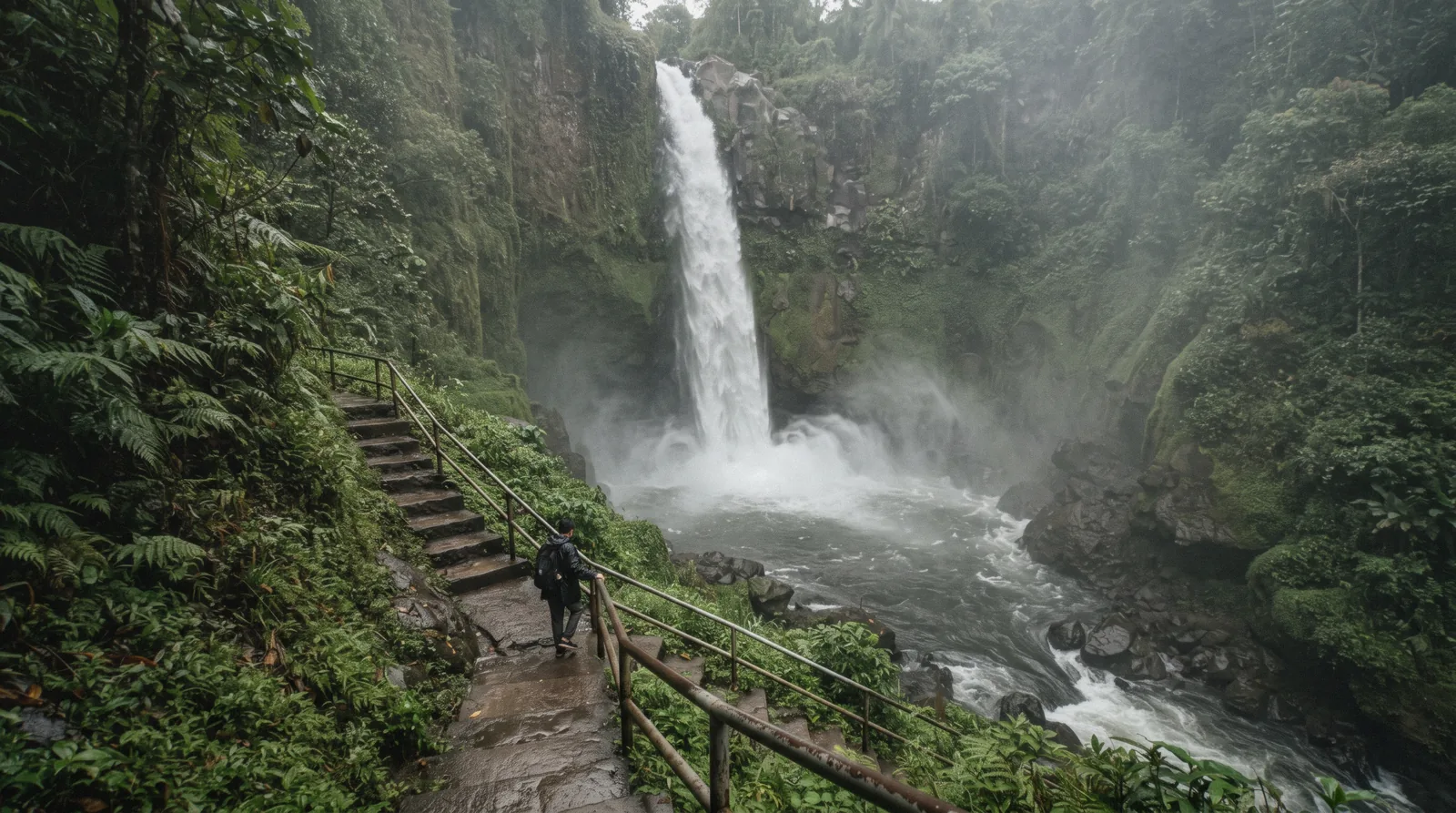
Nungnung Waterfall drops about 50 metres into a steep jungle canyon in Badung Regency, and reaching the base means going down more than 500 concrete steps. It is the tallest and most powerful waterfall close to Ubud, and the hardest to reach. This guide covers the fee, the climb, the swim and how it compares with top waterfall tours near Ubud, Bali.
Quick answer
Nungnung Waterfall drops about 50 metres and sits roughly 30 km, or about 1 hour, north of Ubud in Badung Regency. Expect to pay 20,000 IDR per person to enter, in cash, though a lower 10,000 IDR fee has also been reported by one source. The ticket booth runs 9:00 AM to 4:00 PM daily. The visit means descending more than 500 steep steps, which takes roughly 15-20 minutes down, and the climb back up takes noticeably longer, around 30-45 minutes with breaks. Swimming is possible but the current near the falls is strong, so most people wade rather than swim. For a comparison with easier falls such as Tibumana Waterfall and Tegenungan Waterfall, see the guide below, or check our page on Bali waterfalls.
Key takeaways
- More than 500 steep concrete steps lead into the canyon, roughly 15-20 minutes down
- The climb back up takes about 30-45 minutes with breaks
- Entrance is 20,000 IDR per person, cash only, and parking runs free to around 5,000 IDR
- The waterfall drops about 50 metres and the flow never really dries out
- Ticket booth hours are 9:00 AM to 4:00 PM daily
- It is about a 1 hour drive, roughly 30 km, from Ubud
Seeing Nungnung With a Guide or on Your Own
Nungnung sits well outside the Ubud waterfall loop, about an hour of driving each way, so a private driver or a booked day tour is the practical choice for most visitors. Every bookable product that includes Nungnung pairs it with a second stop rather than running a Nungnung-only trip. The cheapest option is the Leke Leke and Nungnung day at $34, an 8 hour private day that also covers Goa Gong and the Jatiluwih rice terraces, rated 4.9 from 82 reviews. If you want a sunset finish, the Nungnung and Tanah Lot sunset day costs $49.24 over 8-10 hours and adds Taman Ayun temple, rated 5.0 from 6 reviews. The longer version, the Nungnung and Tanah Lot full day at $69 over around 10 hours, includes the entrance fee and warns it is not for people with back or heart problems. Going independent works too, and a scooter or private car from Ubud takes about 1 hour. {checked}
 from $34
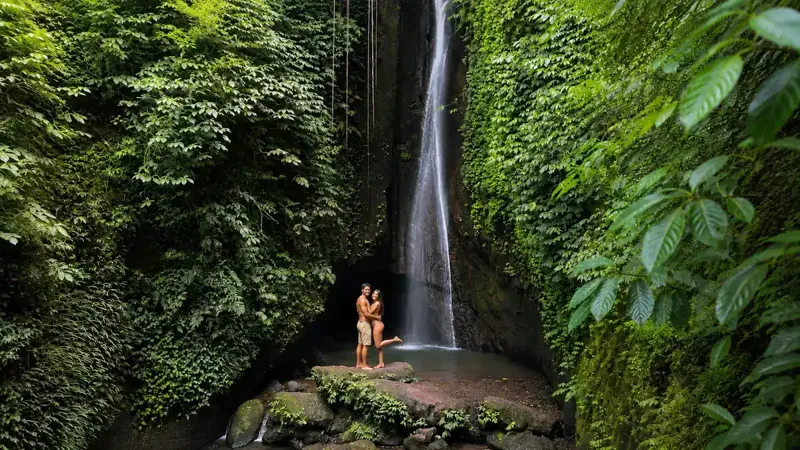
Bali: Leke-Leke, Nungnung, Goa Gong & Jatiluwih Tour
Two of the big falls north of Ubud in one private day: the long stair descent to Nungnung, the cave-like Goa Gong, the Leke Leke gorge, then the…
- Nungnung, down the long stairway to the base
- Goa Gong, a waterfall inside a rock hollow
- Leke Leke in its jungle gorge
- Jatiluwih rice terraces
 from $69
Hidden Bali Waterfall Tour with Nungnung & Tanah Lot Sunset
Nungnung's 500-plus steps down into the spray, a quiet countryside drive and the Tanah Lot sunset to close the day. Not for anyone with back or heart trouble.
- Nungnung waterfall and its long stairway
- Countryside and temple stops
- Tanah Lot at sunset
- Entrance fee included, lunch not
 from $49.24
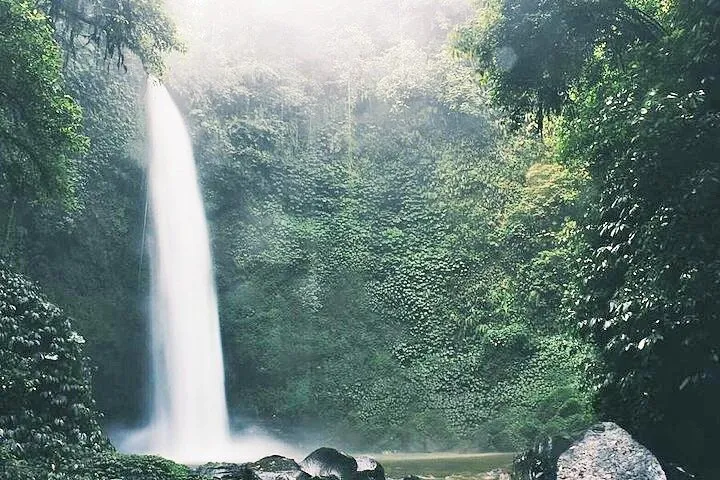
Hidden Nungnung Waterfall and Tanah Lot sunset Private Tour
Nungnung, Taman Ayun temple and the Tanah Lot sunset on a private 8 to 10 hour day, fuel and parking included.
- Nungnung waterfall, about 50 m high
- Taman Ayun royal temple
- Tanah Lot sunset
- Private car, fuel and parking
What Nungnung Waterfall Is and Why It Is Different
A Single 50-Metre Drop in a Jungle Canyon
Nungnung is a single powerful cascade that falls about 50 metres into a narrow, green canyon in Bali's northern-central highlands. Unlike the low, wide falls closer to town, this one throws spray across the whole base, and the ground and rocks near the pool stay permanently wet from the vapour. Stand within a few metres of the falls and you will be soaked within seconds.
That power is the reason people make the trip. It feels wild in a way the town-adjacent waterfalls do not, and the flow stays strong through the year when other falls shrink in the dry months.
The 500-Step Canyon Descent
What really sets Nungnung apart is the approach. You descend more than 500 steep concrete steps into the canyon, and one careful count puts the total at exactly 509. This is the single most repeated fact about the place, and it changes the character of the visit.
At Tegenungan Waterfall you walk down a gentle path. At Nungnung you work for the view, and you work again on the way out. If your legs, knees or fitness are not up for stairs, this is the wrong waterfall for you, and the easier Ubud-area falls will serve you better.
How It Compares at a Glance
Pick your waterfall by effort level. Tegenungan is wide, busy and close to Ubud, the easy default. Tibumana is a single curtain of water dropping into a calm, swimmable pool.
Kanto Lampo spreads across a tiered rock face you can climb partway. Tukad Cepung is a waterfall inside a cave, famous for light beams on the rocks. Nungnung is the outlier on every count.
It is the farthest of the five, the tallest, and by far the hardest hike. If you want a relaxed half day, choose one of the others. If you want the biggest single drop near Ubud and do not mind stairs, Nungnung is the one.
Quick Facts Overview
Nungnung Waterfall at a Glance
Here is the summary most people want before anything else. The entrance fee is most commonly cited as 20,000 IDR per person, paid in cash, though one source reports a lower 10,000 IDR figure. Parking runs from free up to around 5,000 IDR depending on the report.
The booth sells tickets from 9:00 AM to 4:00 PM daily. The waterfall drops about 50 metres. The stairs number more than 500, the way down takes about 15-20 minutes, and the way up takes roughly 30-45 minutes with breaks.
From Ubud the drive is about 1 hour over roughly 30 km. The Common Wanderer and Walk My World both give the 20,000 IDR fee. The car park has toilets and small stalls selling drinks and snacks, and a coffee and tea plantation next door offers tastings and a swing.
| Fact | Detail |
|---|---|
| Entrance fee | 20,000 IDR per person, cash only (10,000 IDR also reported) |
| Parking | Free to a small fee, up to around 5,000 IDR |
| Opening hours | Ticket booth 9:00 AM to 4:00 PM daily |
| Waterfall height | About 50 metres |
| Steps | More than 500, one count gives 509 |
| Descent time | Roughly 15-20 minutes |
| Climb back up | Roughly 30-45 minutes with breaks |
| Distance from Ubud | About 30 km, around 1 hour drive |
| Swimming | Possible but the current is strong, wading is the norm |
Why the Numbers Matter
These figures shape your day more than any other waterfall near Ubud. The fee and parking are trivial, cash matters more than the amount, so bring small notes. The hours are the real constraint, because the booth closes at 4:00 PM and the stairs deserve daylight.
The step count and the asymmetric timings decide whether this is a stroll or a workout, and they are the numbers people underestimate. Locals will tell you the same thing. Going down is fun.
Coming back up is the part you remember, so plan your energy and your water for the return leg, not the arrival.
Where Nungnung Waterfall Is
Badung Regency, Petang District
Nungnung Waterfall sits in Badung Regency, in the northern-central highlands of Bali, near Pelaga village in Petang district. That surprises some visitors who assume anything reachable from Ubud must be in Gianyar. It is not.
The road climbs out of the southern lowlands into cooler hill country, and the landscape around the falls is plantation and forest rather than rice flatland. This is one of the reasons the falls feel different from the Ubud-area group. You are on the edge of Bali's mountain interior here, and the drive itself is part of the experience as the air turns noticeably cooler.
Finding It on the Map
Search Nungnung Waterfall on maps and the pin lands on the road above the canyon, with the car park and the top of the stairway close together. There are no lockers or changing rooms at the base, so everything you bring goes down the stairs with you. Phone signal is generally available at the top of the canyon.
If you are navigating yourself, set your pin for the waterfall rather than the village, because the village name alone can drop you in the wrong place. From Ubud the route runs north for roughly 30 km, and signs for the waterfall appear along the final stretch of road.
Entrance Fee, Parking and Opening Hours
What You Pay at the Booth
The entrance fee is most commonly cited as 20,000 IDR per person. Three independent sources agree on that figure. One source reports a lower 10,000 IDR fee, which may be an older or discounted rate, so sources differ and you should expect 20,000 IDR and treat anything less as a bonus.
Payment is cash only, and no fetched source mentions any digital ticketing at the gate. Bring small notes, because change at a rural ticket booth is not guaranteed. For visitors arriving on a tour, check what is included.
On the Nungnung and Tanah Lot full day the entrance fee is covered, while lunch is not.
Parking, Honestly Framed
Parking is genuinely inconsistent across reports, so treat it as a range rather than a fixed price. One source says parking at the top is free. Another cites a 2,000 IDR scooter parking fee.
Two more cite a 5,000 IDR parking fee. The honest summary is that parking costs nothing to a small fee up to around 5,000 IDR, and the amount may depend on whether you arrive by scooter or car and who is minding the area that day. Either way it is a trivial cost.
Have coins and small notes ready, pay whatever is asked without argument, and walk the few steps to the top of the stairs.
Opening Hours and Late Arrivals
The ticket booth operates 9:00 AM to 4:00 PM daily. Arrive outside those hours and you may find nobody selling tickets, which is a poor outcome after a one hour drive. This is the single most common planning mistake at Nungnung.
Visitors treat it like a beach and turn up mid afternoon, then rush the stairs and the return climb in fading light. Work backwards instead. The whole visit, including the descent, time at the base and the climb back up, fits comfortably in two hours.
Arrive by 2:00 PM at the latest, and earlier if you want the morning windows described below.
How to Get to Nungnung Waterfall
From Ubud
From Ubud the drive is about 1 hour, covering roughly 30 km of road that climbs steadily into the hills. Four independent sources agree on the one hour figure. A private car with driver is the easiest option, and most Ubud drivers will happily quote a half day rate for the round trip.
A scooter works if you are confident on Bali roads, and the final approach is signed. Unlike Tibumana Waterfall or Kanto Lampo, which sit on short detours from the main Ubud loop, Nungnung is a destination in itself. Plan the journey as the main event, not an add-on to a town itinerary.
From South Bali
From Canggu, Seminyak or Kuta the drive is roughly 1 to 1.5 hours depending on traffic, and one source puts it at around 45 km with a faster run possible on a clear road. Traffic out of the southern tourist belt is the variable, so leave early. Leaving the south by around 7:00 AM puts you at the falls near opening, ahead of the middle of the day.
If you are staying in Seminyak or Canggu and do not want to manage the drive yourself, a booked day tour solves it. The Nungnung and Tanah Lot sunset day runs a private car for 8-10 hours with fuel and parking included, which is the pattern most south Bali visitors choose.
The 500-Plus Steps Down and the Longer Climb Back Up
Going Down
The descent is a straight stairway of more than 500 steep concrete steps cut into the canyon wall. One source that counted gives exactly 509. Most people take roughly 15-20 minutes to reach the bottom, moving at an easy pace and stepping aside for people coming up.
The steps are uneven in places and can be damp near the base where the spray drifts up. Take your time on the way down, because tired legs on steep stairs are how ankles get rolled. The good news is that every step you descend is shade and jungle noise, and the sound of the falls grows with every turn.
Coming Back Up Is the Real Hike
Here is the correction that matters. The climb back up is noticeably longer and harder than the descent, roughly 30-45 minutes with breaks. Sources consistently describe the return as a long, sweaty hike, and no source supports an equal down and up time, so ignore any claim of a single figure each way.
Pace yourself on the first hundred steps, stop in the shade whenever you need to, and do not treat this as a sprint. Bring more water than you think you need, because there is a drinks seller at the top of the steps but nothing on the stairway itself.
Who This Hike Suits
The hike is physically demanding and you should say so plainly. There is no handrail description or step width detail in any source worth quoting, and no source offers mobility guidance beyond the general warning, so judge it yourself by the step count and gradient. If you manage several flights of stairs without trouble, you will be fine with breaks. The Nungnung and Tanah Lot full day states outright that it is not for people with back or heart problems, and that warning applies to any visit here.
Pregnant travellers, anyone with knee issues and families with very small children should consider the flatter Ubud-area falls instead.
Can You Swim at Nungnung Waterfall?
Technically Yes, Practically Wading
Swimming at Nungnung is technically possible but not fully recommended. The current near the falls is powerful and can push swimmers away from the drop, and people who try to swim close to the base report being pushed around by the force of the water. Most visitors wade or paddle near the edge of the pool rather than swim out.
Treat the water as a cooling-off station after the stairs, not a swimming hole in the style of Tibumana, where the pool is calm enough for proper swims. Go in up to your waist, enjoy the cold, and keep your eyes on the falls.
No Facilities at the Base
There are no lockers or changing rooms at the waterfall, so plan around that. Anything you do not want soaked stays at the top of the stairs or in the car, and anything valuable should not come down at all. A dry bag is the simple answer if you want your phone at the base for photos.
Wear clothes and footwear you can get wet, because the spray will find you even if you never enter the pool. Change at the car park when you climb back out, and bring a towel in the car rather than carrying it down.
Best Time to Visit Nungnung Waterfall
Two Honest Windows for the Time of Day
Sources differ on the best hour, so here are both windows rather than one confident claim. The first recommendation is 9:00 AM to 10:30 AM, when temperatures are cooler, visitor numbers are lower and the light in the canyon is soft. This is the window most guides suggest and it lines up neatly with the 9:00 AM booth opening.
The second recommendation is 11:00 AM to 2:00 PM on a sunny day, when the sun shines directly over the falls and the water is lit from above. If you want photos of the drop in full light, that later window has real logic to it.
Dry Season Versus Wet Season
The dry season runs April to July and gives safer, less slippery steps while the waterfall still flows strongly. The wet season runs October to March and makes the waterfall more powerful and dramatic, but brings heavier spray and slippery paths. The important nuance is that unlike many Bali waterfalls, which shrink to a trickle late in the dry season, Nungnung's flow never really dries out.
That makes it a dependable choice at any time of year, and it means you are not trading volume for safety the way you might elsewhere. Choose the dry months for surer footing, the wet months for drama.
What to Bring and Safety Notes
The Short Packing List
Bring grip footwear first, because the steps are steep, uneven and can be slick near the base where the spray drifts. Proper sandals with grip or light trainers beat smooth-soled flip flops. Bring water for the climb back up, since the only drinks seller is at the top of the steps.
Bring sun protection for the car park and the stairway's exposed stretches, and a dry bag for your phone if you want photos at the base. Cash in small notes covers the fee and parking. That is the whole list, and every item on it earns its place.
The Spray and the Wet Rock
The waterfall's power keeps the ground and rocks near the base permanently wet from the vapour, and standing within a few metres of the falls means getting soaked by spray within seconds. In the wet season the spray carries further and the surrounding jungle stays misty through the day. Plan your photography from a few steps back, protect your phone, and accept that a soaked shirt is part of the visit.
The rocks near the pool can be slick underfoot, so move carefully even where the stone looks dry. The falls do not need you to stand underneath them to be impressive.
After Heavy Rain, Consider Another Day
If it has rained heavily, it is worth visiting another day. The steps become more slippery and the trail less forgiving, and a stairway this steep with wet concrete is a different proposition from the same stairway dry. This matters most during the October to March wet season, when afternoon downpours are routine.
Check the previous day's weather before committing to the drive, and if the sky has dumped rain overnight, shift your plan to a flatter waterfall closer to Ubud. The falls will still be there, and they will still be running strong whenever you come back.
Nungnung Compared With the Other Ubud-Area Waterfalls
The Four Closer Falls
Tegenungan is the wide, busy one closest to Ubud, easy to reach and often crowded. Tibumana is a single curtain of water into a calm pool, the best relaxed swim of the group. Kanto Lampo is a tiered rock face you can walk partway up, great for photos on the water.
Tukad Cepung is a fall inside a cave, famous for light beams across the rock in the middle of the day. Each of those four sits on or near the standard Ubud loop, and you can see two or three in a single easy outing. Read the full pages on Kanto Lampo Waterfall and Tukad Cepung Waterfall for their own details.
Where Nungnung Fits
Nungnung is the outlier in every comparison. It is the farthest from Ubud, about 1 hour by car against short hops for the others. It is the tallest, dropping about 50 metres in a single powerful drop.
And it is by far the hardest to reach, with more than 500 steps standing between the car park and the pool. It is also the least crowded, because the stairs filter out the casual visitor. The right way to decide is simple.
If the day is about easy beauty and swimming, stay on the loop. If the day is about seeing the biggest fall near Ubud and earning it, drive north to Nungnung.
Visiting Independently or With a Guide
When Independent Works
Independent travel to Nungnung is entirely doable. A confident scooter rider can make the trip from Ubud in about 1 hour, and a private car with driver costs a reasonable half day rate. The entrance fee and any parking charge are small, the site is straightforward once you arrive, and the stairs need no guiding.
What independence costs you here is time and pairing. With a full 2 hours at the falls and 2 hours of driving, Nungnung eats most of a day on its own, and most independent visitors struggle to add a second meaningful stop without rushing.
When a Tour Earns Its Fee
A tour earns its fee at Nungnung when you want the drive handled and a second stop built in. Every bookable product covering these falls pairs Nungnung with something else, because a Nungnung-only round trip is an uncommon product. The Leke Leke and Nungnung day at $34 is the value pick, an 8 hour private day adding the Goa Gong waterfall, the Leke Leke gorge and the Jatiluwih rice terraces, rated 4.9 from 82 reviews. The Nungnung and Tanah Lot sunset day at $49.24 runs 8-10 hours with Taman Ayun temple and a Tanah Lot sunset. The Nungnung and Tanah Lot full day at $69 stretches to around 10 hours and includes the entrance fee.
Nearby: Leke Leke, Jatiluwih, Bedugul and Sekumpul
Leke Leke and Jatiluwih
Leke Leke Waterfall is about a 30-minute drive from Nungnung and shares a similar jungle-hike feel, a narrow cascade at the end of a short gorge walk, though a far easier one. Pairing the two is the most natural waterfall double in this part of Bali, and it is exactly what the Leke Leke and Nungnung day builds its route around. The Leke Leke Waterfall page has the full detail.
Jatiluwih Rice Terrace, a UNESCO World Heritage site, is about an hour's drive from Nungnung, and its terraced hillsides make a calm, flat contrast after the stairs. Many north Bali days end there.
Bedugul and Sekumpul
The Bedugul area, home to the lake temple Pura Ulun Danu Bratan, sits roughly 45 minutes further north of Nungnung, which makes Nungnung a sensible stop on a run toward the central highlands. If you have a full day and want Bali's biggest waterfall payoff, continue to Sekumpul Waterfall, about an hour's drive north of Nungnung. Sekumpul is often called Bali's most beautiful waterfall, twin cascades dropping about 80 metres into a pool, with an entry of 20,000 IDR.
Read our Sekumpul Waterfall guide before adding it, because its own hike and access have their own demands.
Where Is Nungnung Waterfall?
Nungnung sits in the northern-central highlands of Badung Regency, roughly 30 km and about 1 hour north of Ubud.
Nungnung Waterfall: Frequently Asked Questions
How long is the hike to Nungnung Waterfall?
The hike is a stairway of more than 500 steep concrete steps into the canyon. Going down takes roughly 15-20 minutes. The climb back up is noticeably longer and harder, around 30-45 minutes with breaks, so plan roughly an hour of stair time plus whatever you spend at the base.
Can you swim in Nungnung Waterfall?
Technically yes, but it is not fully recommended. The current near the falls is powerful and can push swimmers away from the drop. Most visitors wade or paddle near the edge of the pool instead of swimming out.
How much does it cost to enter Nungnung Waterfall?
Expect 20,000 IDR per person, paid in cash at the booth. One source reports a lower 10,000 IDR fee, so sources differ, and 20,000 IDR is the figure to plan for. No lockers or changing rooms are included, and there is no digital ticketing mentioned in any source.
Where is Nungnung Waterfall located?
It is in Badung Regency, in the northern-central highlands of Bali, near Pelaga village in Petang district. That puts it about 30 km, or roughly 1 hour by car, north of Ubud, and about 1 to 1.5 hours from Canggu, Seminyak or Kuta depending on traffic.
What time does Nungnung Waterfall open?
The ticket booth operates 9:00 AM to 4:00 PM daily. Arrive within those hours or you may find nobody selling tickets. For the coolest, quietest visit, aim for the 9:00-10:30 AM window shortly after opening.
How do I get to Nungnung Waterfall from Ubud?
Drive north for about 1 hour, covering roughly 30 km of road that climbs into the highlands. A private car with driver is the easiest option, a scooter works for confident riders, and a booked day tour removes the driving entirely. Set your map pin for the waterfall itself rather than the village name.
Is there a parking fee at Nungnung Waterfall?
Sources differ, so treat it as a range. One report says parking at the top is free, one cites a 2,000 IDR scooter fee, and two cite 5,000 IDR. The honest summary is free to a small fee up to around 5,000 IDR, so carry coins and small notes.
Is Nungnung Waterfall safe during the rainy season?
The wet season, October to March, makes the falls more powerful and dramatic but brings heavier spray and slippery paths. If it has rained heavily, consider visiting another day, because the steps become more slippery and less forgiving. In the dry season from April to July the steps are safer while the flow stays strong.
What should I bring to Nungnung Waterfall?
Bring grip footwear, water for the climb back up, sun protection and cash in small notes. A dry bag protects your phone from the spray, which will soak you within seconds if you stand close to the falls. Leave anything valuable in the car, since there are no lockers at the base.
How is Nungnung Waterfall different from Tegenungan, Tibumana, Kanto Lampo and Tukad Cepung?
Nungnung is the outlier on every count. Tegenungan is wide, busy and close to Ubud, Tibumana is a curtain into a calm pool, Kanto Lampo is a tiered rock face and Tukad Cepung is a cave fall with light beams. Nungnung is the farthest, the tallest at about 50 metres, and the hardest, with more than 500 steps.
Is Nungnung Waterfall worth the hike?
If you are comfortable on stairs, yes. It is the tallest and most powerful waterfall near Ubud, the flow never really dries out, and the 500-step descent keeps the crowds away. If stairs, heat or knee trouble are a concern, the flatter falls on the Ubud loop will give you a better day.
Which is the best waterfall to visit in Bali?
It depends on what you want. For the biggest single drop near Ubud, Nungnung. For the best calm swim, Tibumana. For light beams in a cave, Tukad Cepung. For Bali's most famous cascade, many people point to Sekumpul in the north, twin falls about 80 metres high, an hour beyond Nungnung.