Tukad Cepung Waterfall, Bali

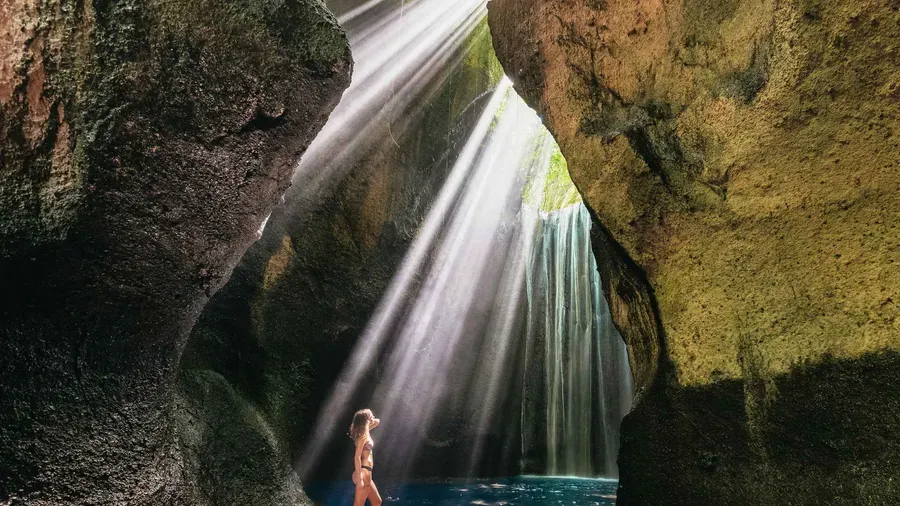
Tukad Cepung waterfall drops through a crack in a canyon roof, not off an open cliff, so the whole way in runs through a narrow gorge and a shallow river before the cave even comes into view. We guide travelers into that gorge several mornings a week, and the reason most of them come is the light: a column of sun that falls through the gap above the falls on a clear late morning and turns the spray into something closer to a stage set than a jungle stream. This guide covers the fee, the timing, the walk down, and what changes on a cloudy day, so you arrive knowing what you'll actually get. Getting the light right is easier with someone who watches the forecast, so we compare the Tukad Cepung tours leaving Ubud on the main page.
Quick answer
Tukad Cepung waterfall sits inside a narrow canyon east of Ubud, reached by roughly 100 steps down and then a wade through the shallow river to the cave mouth. Entry costs 30,000 IDR per person, cash only, and the site opens 7:00 AM to 6:00 PM daily. The light beam that draws most visitors appears roughly between 9:00 and 11:00 AM on a sunny day only; on a cloudy morning the cave stays lit but the beam does not form. The water is shallow enough for wading and splashing, not deep enough for a swim.
Key takeaways
- Entrance fee: 30,000 IDR per person, cash only (last verified: August 2026)
- Hours: 7:00 AM to 6:00 PM daily
- Light beam: roughly 9:00 to 11:00 AM, but only on a sunny day
- The walk: about 100 steps down, then wading through the shallow river to the cave
- Swimming: shallow wading and splashing only, no real swim
- Drive from Ubud: about 40 minutes to an hour depending on traffic
- Timing decides the whole visit, so a driver who watches the sky helps. Tours that build in the light window are below.
Visiting Tukad Cepung Independently vs. With a Guide
Tukad Cepung is the hardest of the four Ubud waterfalls to time well on your own. Getting the light beam right means being in the canyon at 9:00 to 11:00 AM, on a day the forecast actually cooperates, after a drive that can run anywhere from 40 minutes to close to two hours depending on where you're starting from. A driver who tracks the weather and knows the parking situation earns the fee here more than at any other waterfall on this site. These waterfall tours that include the cave build Tukad Cepung into a private or small-group day alongside the other Ubud cascades, so someone else handles the timing and the roads.
 from $29
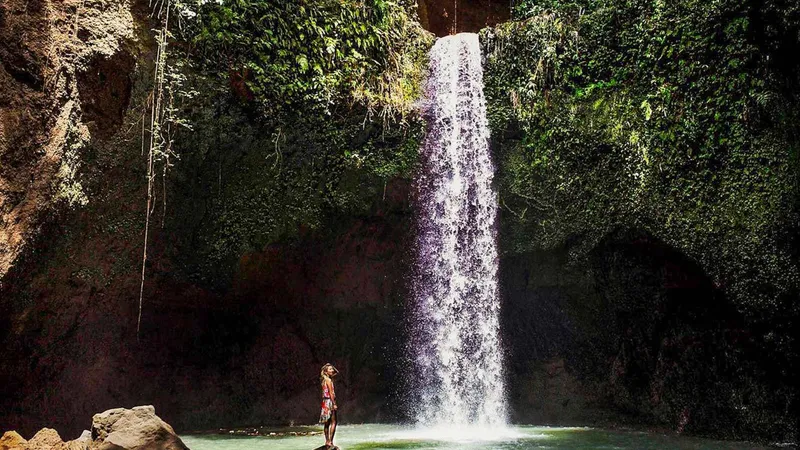
 Ubud: Spectacular Waterfalls Tour
One day, three of the waterfalls people actually come to Ubud for: Tibumana, Tukad Cepung and Kanto Lampo. A driver-guide handles the roads between them, so the day…
- Tukad Cepung, where the light drops into the cave through a gap in the rock
- Tibumana, a single curtain fall with a pool calm enough to swim in
- Kanto Lampo, the tiered cascade that runs straight down the rock face
- Air-conditioned car and pickup from the Ubud area
 from $23
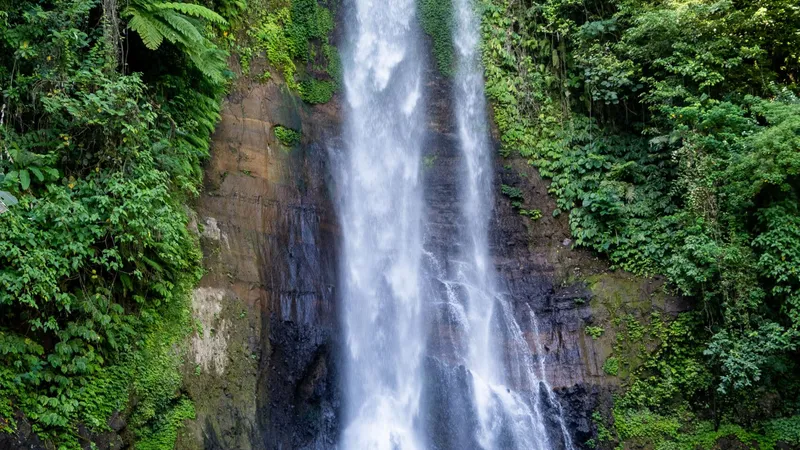
 Ubud: Waterfalls, Water Temple & Rice Terraces Private Tour
A private Ubud day built around three landmarks: a jungle waterfall, the holy spring temple of Tirta Empul, and the Tegalalang rice terraces. You choose a six-hour run…
- Tegalalang rice terraces, the tiered valley Ubud is known for
- Tirta Empul — the holy spring temple where Balinese still come to bathe
- Ubud waterfall stop with swimming time
- Private car and driver-guide; six-hour or full-day option
 from $29
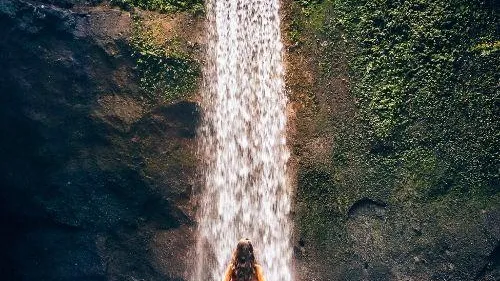
 Ubud: Private Scenic Waterfalls & Rice Terraces Tour
Experience Ubud's most stunning waterfalls — Tegenungan, Tibumana, and Tukad Cepung — plus the iconic Tegalalang Rice Terrace on a private guided tour. Discover Bali's most celebrated natural…
- Three waterfalls: Tegenungan, Tibumana & Tukad Cepung
- Tukad Cepung — the legendary cave waterfall with light beams
- Tegalalang Rice Terrace panoramic viewpoint
- Fully private — just you and your guide
What Tukad Cepung Waterfall Is
Three other waterfalls near Ubud pull crowds for very different reasons, and Tukad Cepung is the one built around geology rather than water volume. Tegenungan is wide and loud, a big pool at the bottom of paved steps. Kanto Lampo runs down a tiered rock face you climb over rather than walk beside. Tibumana is a single curtain that lands in a pool calm enough to actually swim laps in.
Tukad Cepung is none of those. The waterfall itself is modest, dropping about 15 meters (50 feet) inside a canyon the river has carved into a rock chamber over centuries, and the appeal is what happens to the light once it gets inside: on a clear morning, sun drops through a gap in the canyon roof and lands as a visible column of light in the mist, an effect photographers now travel specifically to catch.
Tukad Cepung Quick Facts
The numbers below are the ones we get asked about most, gathered here before the longer sections walk through each one.
| Detail | Tukad Cepung Waterfall |
|---|---|
| Hours | 7:00 AM to 6:00 PM, daily |
| Entrance fee | 30,000 IDR per person, cash only |
| Parking | Free, or a small 2,000-5,000 IDR fee depending on the day |
| Drive from Ubud | About 40 minutes to an hour |
| Waterfall height | About 15 meters (50 feet) |
| Walk down | Roughly 100 steps, then river wading |
| Light beam window | Roughly 9:00 to 11:00 AM, sunny days only |
| Swimming | Shallow wading only, not a real swim |
Getting to Tukad Cepung Waterfall
From Ubud
From central Ubud, Tukad Cepung is close enough for a half-day trip but far enough that traffic matters. One route measures the drive at 38 minutes over 33 km; other sources round it up to about 1 hour once you account for normal Ubud traffic. Leaving before 8:00 AM keeps you inside that shorter estimate; leaving at mid-morning, when local traffic and other visitors are both on the same road, tends to push closer to the hour mark.
From Seminyak, Canggu or Kuta
Coming from Seminyak, Canggu or Kuta, the drive stretches to 1.5 to 2 hours over about 50 km, since you're crossing most of southern Bali before you even reach Ubud's outskirts. Because the drive from the south eats most of a morning, most visitors coming from Seminyak or Kuta pair Tukad Cepung with other Ubud-area stops rather than making it a standalone trip, and a driver who already knows the roads and the light window saves real time over navigating it yourself.
From Sanur
From Sanur, the drive runs close to the same length as from Seminyak or Canggu, since you're covering roughly the same diagonal across southern Bali before angling north into Bangli. Budget 1.5 to 2 hours depending on how the Denpasar ring road is running that morning; leaving before 7:00 AM avoids the worst of the school and work traffic that builds through the city center by mid-morning.
From Ngurah Rai Airport
The airport sits about 53 km from Tukad Cepung, a drive of roughly 71 minutes without heavy traffic, though congestion around the airport and the drive north through Denpasar can add real time depending on the hour you land. Few visitors make this drive straight off a flight; it's more common to settle into Ubud or the south first and treat Tukad Cepung as a day trip once you're unpacked.
The Parking Area on Arrival
The lot at Tukad Cepung is small and informal, gravel and packed earth rather than paved, with an attendant directing motorbikes and cars into whatever space is open. It fills fastest during the 9:00 to 11:00 AM light window in high season, when tour vans and independent visitors arrive at the same time; outside that window, especially before 8:30 AM, there's rarely a wait. A row of small warungs and souvenir stalls lines the edge of the lot, the same ones covered in the where-to-eat section below.
Scooter, Car, or Driver
A scooter gets you closest to the stairs and is the easiest way to reach the entrance if you're already comfortable riding Bali's back roads, since parking is simple and traffic on the smaller roads into Tembuku is light outside peak hours. A rental car works fine but means a longer walk from wherever you can find room to park if the small lot near the entrance fills up. Hiring a driver for the day removes the parking question entirely and adds someone checking the forecast and the road conditions before you commit to the drive, which matters more here than at any other Ubud waterfall given how tightly the light window is tied to the weather.
Fees, Cash and What You're Paying For
Entry to Tukad Cepung costs 30,000 IDR per person, and the gate takes cash only, so bring rupiah rather than counting on a card machine. The site is open 7:00 AM to 6:00 PM every day of the week. Parking is the one figure locals and guidebooks don't agree on: some days the attendant waves you through for free, other days there's a 2,000 to 5,000 IDR charge, and we've never found a consistent rule for which applies.
Budget for the higher end and treat a free pass as a bonus. Last verified: August 2026.
What the Fee Covers
The entrance fee covers access to the trail, the canyon and the cave itself, nothing more. It doesn't include a guide, a locker, or a towel. Unlike some of the other Ubud waterfalls, we haven't found reports of lockers or a changing room at Tukad Cepung, so keep valuables in a dry bag rather than counting on somewhere to store them, and plan to change back into dry clothes at your car or hotel rather than on site.
Cash, the Nearest ATM, and Tipping
There's no card option at the gate, and the nearest ATMs are back in Tembuku or Bangli town rather than at the site itself, so withdraw or exchange what you need before you head out. Locals stationed near the cave sometimes offer to take your photo with your own phone in exchange for a small tip; it isn't an official service, it's entirely optional, and it's worth having a few thousand rupiah spare if you'd rather have someone else frame the shot than hold up the light-beam queue fumbling with a timer.
The Walk Down: Steps, River Wading and Difficulty
The path in starts with a staircase, roughly 100 steps cut into the hillside down to the canyon floor. That part is straightforward if unglamorous. What surprises most first-timers is what comes after the stairs: the trail doesn't stay dry.
You wade through the river itself, stepping around boulders in the shallow water, to reach the cave mouth where the waterfall drops. There's no way around this part; it is the approach, not a detour. Between the stairs and the wading, Tukad Cepung is not workable for wheelchairs, strollers, or anyone with limited mobility, and young kids need a hand on the slicker rocks in the streambed.
The Descent and Wade, Minute by Minute
From the ticket gate, the roughly 100 steps take most visitors about 10 minutes to descend at a normal pace, longer if you stop to look at the canyon walls on the way down. At the bottom the trail turns into the river itself: the 10 to 15 minute wade means stepping between boulders in water that runs ankle-deep in the shallows and knee-deep at most in the deeper channels, depending on recent rain. Wet feet are guaranteed; a wet phone is likely unless you're carrying it in a dry bag, since the wading and the mist near the falls both soak anything you're not actively protecting.
Inside the cave, most visitors stay somewhere between 15 and 30 minutes, longer during the light window when there's often a short wait for a clear spot to photograph the beam without someone else standing in it. Add the walk back out, uphill on wet stairs, and a full visit runs close to an hour door to door.
The Light Beam: Best Time Window
This is the fact worth getting right before you plan the trip around it. Two independent accounts put the light beam window at 9:00 to 11:00 AM, and a third describes it more loosely as appearing around midday, when the sun sits higher in the sky. Treat 9:00 to 11:00 AM as the number to plan around, with the understanding that the exact minutes shift slightly with the season and the day.
What none of these sources dispute is the condition attached to all of it: the beam only forms on a sunny day. Clouds block it entirely. On an overcast morning you'll still see the cave, the waterfall, and the canyon walls, all worth the walk on their own, but the shaft of light that makes Tukad Cepung famous simply won't appear.
Check the morning forecast before you commit to the drive.
| Time | What You'll See (Sunny Day) |
|---|---|
| 7:00-9:00 AM | Cave lit but low, no beam yet, sun still too low |
| 9:00-10:00 AM | Beam starts to form, a thin shaft through the gap |
| 10:00-11:00 AM | Peak window, the beam is strongest and most defined |
| After 11:00 AM | Beam fades as the sun moves past the gap overhead |
| Any time, cloudy sky | No beam forms, just diffuse grey light inside the cave |
An Hour Early, an Hour Late, and What Rain Changes
Arrive at 8:00 AM, a full hour before the window opens, and you'll have the canyon close to yourself: no beam yet, but also no queue for the best standing spot when the light does arrive, so some visitors deliberately arrive early just to claim position and wait. Stay past noon and the cave doesn't go dark, it just goes back to being a shaded rock chamber with a waterfall in it, the same as an overcast morning. In high season, the 10:00 to 11:00 AM peak draws enough visitors that getting a clear photo without someone else's silhouette in the beam can mean a short wait, five to ten minutes on a busy day, longer on weekends and around holidays.
Heavy rain changes the wade more than it changes the light: after a hard downpour upstream, the river through the canyon runs higher and faster, the water can turn from clear to a churned brown, and the crossing that's normally an easy knee-deep wade can become genuinely unsafe. If it's been raining hard in the hours before you go, this is the specific thing to ask about locally, not just whether the trail is officially open.
What You Actually See on a Cloudy Day
Cloudy mornings still get visitors, and it's worth knowing what you're signing up for before you make the drive. Without direct sun, the canyon settles into flat, even light: grey-green rock, white water, and a soft glow filtering down through the gap rather than a defined shaft. The waterfall itself is unchanged, the cave acoustics are the same, and it's still a genuinely striking spot to stand in, just without the single feature that makes the photos go viral.
Some visitors find the moodier, diffuse light easier to shoot on a phone camera, since there's no harsh contrast between the beam and the shadow around it. If the forecast looks doubtful, treat it as a real cave-waterfall visit worth doing on its own terms rather than skipping the trip entirely and waiting for a clearer day that may not come during your stay.
First-Time Visitor Mistakes at Tukad Cepung
The most common mistake is arriving at 11:30 AM or later expecting the beam to still be going, having read about the window but not registered how firmly it closes once the sun angle shifts. The second is showing up in flip-flops or sneakers that can't get wet, then either turning back at the river or ruining a pair of shoes better saved for the rest of the trip. The third is leaving a phone in a pocket rather than a dry bag and finding out the hard way how much spray and wading water it takes to kill a speaker or a charging port.
The fourth, less obvious one: skipping a weather check and driving out on a morning that was always going to be overcast, when a quick look at the forecast the night before would have saved the trip for a clearer day.
Swimming, Safety and When to Go
Can You Swim at Tukad Cepung Waterfall?
Not really. The river inside the canyon runs shallow, knee-deep at most, enough to wade through and splash around in but not deep enough for an actual swim. There's a small pool at the base of the falls, but it's not built for laps or for jumping in; treat it as a place to cool off after the walk down, not a swimming destination.
If a real swim matters to your day, save it for Tibumana, where the pool is deep and calm enough to actually use.
Best Time to Visit: Season and Time of Day
Time of day matters more than time of year here, since the beam depends entirely on a clear sky at 9:00 to 11:00 AM rather than on any particular month. No source we've checked ties the light window to a specific season, so don't plan a trip around a supposed best month for the beam; check the forecast the night before instead. In the dry season, April through October, the river runs clearer and the flow is gentler, which makes both the photos and the wade easier.
What to Bring and Wear
Wear water shoes or grippy sandals, something with real tread, because the rocks in the streambed get slippery underfoot and bare feet or flip-flops don't hold. Bring a dry bag or waterproof phone pouch for the wade in, a change of clothes for the drive back, and cash in small rupiah notes for the entrance gate. A lens cloth is worth packing too, since the mist around the falls fogs up a camera fast.
Safety Notes and Rainy-Season Closures
The canyon that makes Tukad Cepung dramatic is the same feature that makes it risky after heavy rain: water rises fast in a confined space, and flash-flood conditions are a real concern during the wet season, November through March. In the wet season, the same river can run higher and browner after rain upstream, and the trail or crossing may close for a day or more following a serious storm even if the skies over the canyon itself look clear, since the extra water is coming from higher ground. If it's been raining hard in the hours before your visit, ask locally or check with your driver before heading down, since the trail or river crossing can close without much notice.
If a closure is in effect there's usually a sign or an attendant posted at the top of the stairs before you commit to the descent.
Tukad Cepung vs. Tegenungan, Kanto Lampo and Tibumana
All four sit within roughly an hour of Ubud, and each rewards a different kind of visit. Tegenungan is the easiest and busiest, a wide cascade with paved steps down to a big swimming pool. Kanto Lampo runs down a tiered black rock face that you scramble over rather than walk beside, better for photos than for swimming. Tibumana is the quiet one, a single curtain falling into a calm pool that's genuinely good for swimming. Tukad Cepung stands apart from all three: it's the only one built around a cave and a light effect rather than a pool, and the only one where the walk in means wading through a river rather than walking beside one.
| Waterfall | What It Is | Swimming | Effort |
|---|---|---|---|
| Tukad Cepung | Cave waterfall with a light beam through the canyon roof | Shallow wading only | Steps then river wading, moderate |
| Tegenungan | Wide cascade into a big open pool | Yes, easy swimming | Easy, paved steps |
| Kanto Lampo | Tiered curtain down a black rock face | Yes, between the tiers | Steep steps then a rock scramble |
| Tibumana | Single curtain into a calm pool | Yes, the best of the four for swimming | Moderate, quieter walk in |
What Pairs Well With Tukad Cepung
Because the light window closes by late morning, plan Tukad Cepung as the first or second stop of the day rather than an afternoon add-on. Tegenungan sits closest to Ubud, so it works well as an early add-on before continuing east; Tibumana sits roughly between the two, so pairing all three, Tegenungan, Tibumana and Tukad Cepung, in one direction is a realistic full morning if you start by 7:30 AM. Kanto Lampo sits in the opposite direction from central Ubud, closer to Gianyar, which makes a same-day pairing with Tukad Cepung more of a stretch: doable, but it adds real backtracking rather than a smooth loop, so it fits better as a separate half-day than tacked onto the light-beam morning.
Where to Eat Nearby
There's no full restaurant scene at the site itself, just a handful of small warungs near the parking area and along the road toward Tembuku serving simple plates like nasi campur and mie goreng. Most visitors treat lunch as something to grab on the way back toward Ubud rather than at the falls, since the walk down and back takes the better part of an hour on its own.
Where Is Tukad Cepung Waterfall?
Tukad Cepung sits inside a canyon near Tembuku, in the Bangli regency east of Ubud.
Tukad Cepung Waterfall: Frequently Asked Questions
How long does it take to hike to Tukad Cepung Waterfall?
Budget 30 to 45 minutes total: about 10 minutes down the roughly 100 steps, another 10 to 15 minutes wading through the river to the cave, and the same in reverse. Add extra time if you're stopping for photos inside the canyon, which most people do.
Is Tukad Cepung Waterfall worth it?
On a sunny morning between 9:00 and 11:00 AM, yes, the light beam through the canyon roof is genuinely one of the more striking sights near Ubud. On a cloudy day you still get a real cave waterfall and a good short hike, just without the effect that makes the photos famous, so weigh the forecast before committing a whole morning.
What time do the light beams appear at Tukad Cepung Waterfall?
Roughly 9:00 to 11:00 AM on a sunny day, with the beam usually strongest between 10:00 and 11:00 AM. It only forms with direct sun; clouds block it entirely, so check the forecast the night before rather than assuming any fixed hour will work.
How much does it cost to visit Tukad Cepung Waterfall?
Entrance is 30,000 IDR per person, cash only. Parking runs free most days or a small 2,000 to 5,000 IDR fee on others; there's no consistent rule for which applies. Last verified: August 2026.
What time does Tukad Cepung Waterfall open?
7:00 AM to 6:00 PM, daily, with no weekly closure day reported.
Is Tukad Cepung safe during the rainy season?
Use extra caution. The canyon setting means water rises fast after heavy rain, and flash-flood conditions are a real risk during the wet season, November through March. Check locally before heading down if it's been raining hard.
Is Tukad Cepung suitable for kids or people with mobility issues?
It's manageable for older kids who can handle roughly 100 steps and a river wade with a hand to hold. It doesn't work for wheelchairs, strollers, or anyone who can't manage slippery, uneven footing, since the walk in has no dry alternative route.
How do I get to Tukad Cepung Waterfall from Ubud?
It's about 40 minutes to an hour by car or scooter, covering roughly 33 km depending on the exact route and traffic. A private tour from Ubud that includes Tukad Cepung handles the driving and timing for you.
What should I wear or bring to Tukad Cepung Waterfall?
Water shoes or grippy sandals, since the streambed rocks are slippery, plus a dry bag for your phone, a change of clothes, and small rupiah notes for the gate.
How is Tukad Cepung different from Tegenungan, Kanto Lampo and Tibumana waterfalls?
Tukad Cepung is the only one of the four built around a cave and a light effect rather than a swimming pool. Tegenungan is the widest and busiest with the biggest pool, Kanto Lampo is a tiered rock-face cascade, and Tibumana is the quiet single-curtain fall with the calmest, most swimmable pool of the group.
We've watched first-time visitors turn the corner into that canyon plenty of times, and the reaction is almost always the same: a beat of silence, then someone reaching for their phone. Time it right and Tukad Cepung earns every one of those roughly 100 steps down. Time it wrong, on a cloudy morning with no plan B, and it's a nice cave waterfall you'll walk past quickly.
The difference is almost entirely the forecast and the hour you arrive, not luck.