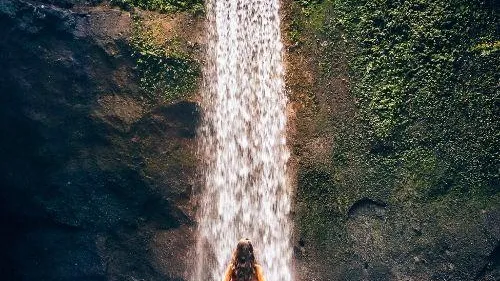
Tibumana Waterfall, Bali

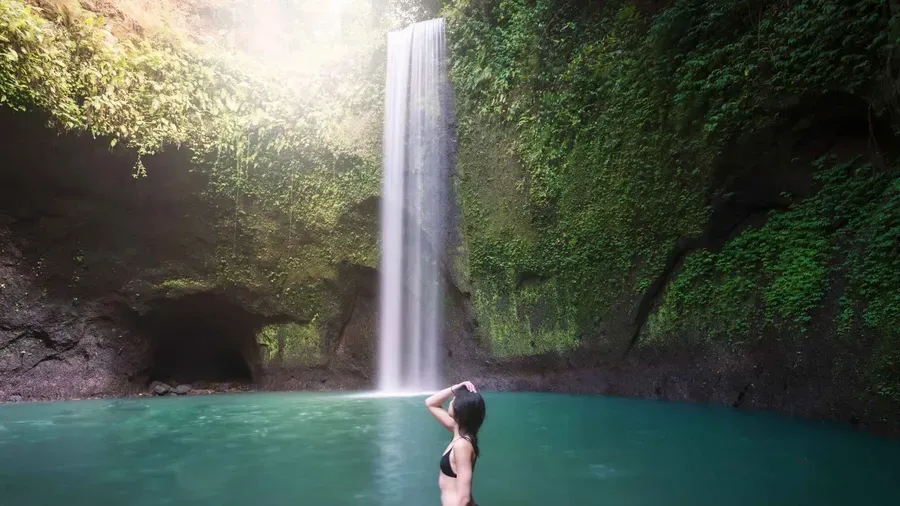
Tibumana waterfall is the one we send people to when they actually want to swim, not just photograph a cascade from a viewing platform. A single curtain drops into a pool calm enough to float in, a ten to fifteen minute walk from the parking area past bamboo bridges and concrete stairs, and most mornings it's the quietest of the four major waterfalls near Ubud. This guide covers the fee, the hours, the swim conditions, and how Tibumana stacks up against Tegenungan, Kanto Lampo and Tukad Cepung. If you want the swim without the drive, the Tibumana waterfall day tours are compared on the main page.
Quick answer
Tibumana waterfall is a single curtain fall east of Ubud, landing in a calm pool that's the best of the four Ubud-area waterfalls for actually swimming. Entrance runs around 25,000 IDR per person, cash only, though older listings cite 15,000 to 20,000 IDR, so treat the fee as one that varies. Hours are 7:00 AM to 6:00 PM daily. The walk in from the parking area takes 10 to 15 minutes along walkways, bamboo bridges and concrete stairs that turn slippery when wet. A lifeguard is on duty and signage marks safe swimming zones; skip swimming directly under the falls.
Key takeaways
- Entrance fee: around 25,000 IDR per person, cash only, though it has ranged 15,000-25,000 IDR across sources (last verified: August 2026)
- Hours: 7:00 AM to 6:00 PM daily
- Walk in: 10 to 15 minutes each way, about 500 meters, on stairs and bamboo bridges
- Swimming: yes, in the calm pool, with a lifeguard on duty; skip swimming directly under the falls
- Quietest window: roughly 7:00 to 9:00 AM, before tour groups arrive after 11:00 AM
- Drive from Ubud: about 40 to 45 minutes, roughly 14 kilometres
- The best of the four for an actual swim. Tours with time in the pool are listed below.
Visiting Tibumana Independently vs. With a Guide
Tibumana is straightforward enough to reach on your own scooter, but the payoff is time in the water, and a driver who already knows the parking situation and the quietest hours gets you into the pool faster than working it out yourself. Going independently means you set your own schedule and can simply turn around and try again another morning if the crowd looks heavier than you'd like. Going with a guide trades that flexibility for someone who already knows which hours run quiet, handles the drive from wherever you're staying, and can fold in Tegalalang or the Monkey Forest without you having to plan the route. These Ubud waterfall trips with swimming time build Tibumana into a private or small-group day, often alongside Tegalalang's rice terraces or the Monkey Forest.
 from $23
 Ubud: Full-Day Rice Terrace, Monkey Forest & Waterfall
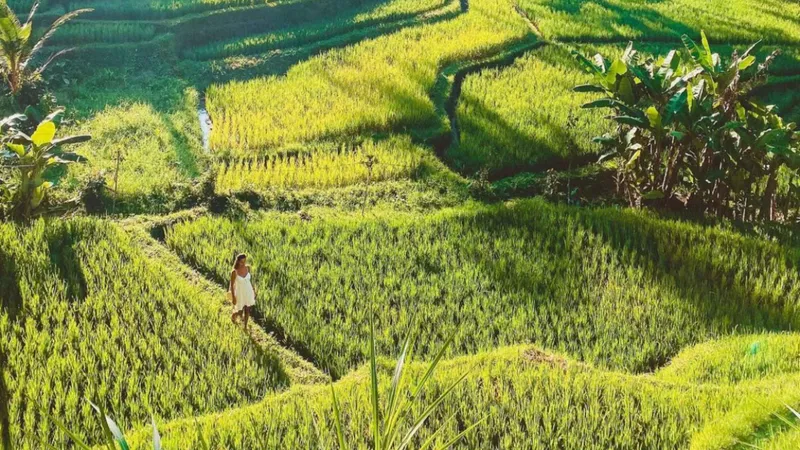
A full day pairing Tibumana Waterfall with the Tegalalang terraces and the Monkey Forest, run privately so the stops stretch or shorten as you like.
- Tibumana Waterfall with time in the pool
- Tegalalang rice terraces
- Sacred Monkey Forest Sanctuary in Ubud
- Private car with pickup and drop-off
 from $29
 Ubud: Spectacular Waterfalls Tour
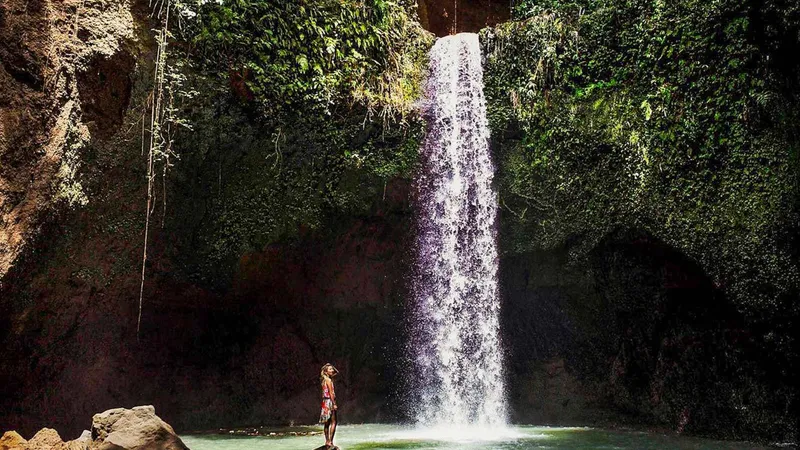
One day, three of the waterfalls people actually come to Ubud for: Tibumana, Tukad Cepung and Kanto Lampo. A driver-guide handles the roads between them, so the day…
- Tukad Cepung, where the light drops into the cave through a gap in the rock
- Tibumana, a single curtain fall with a pool calm enough to swim in
- Kanto Lampo, the tiered cascade that runs straight down the rock face
- Air-conditioned car and pickup from the Ubud area
 from $23
 Ubud: Waterfalls, Water Temple & Rice Terraces Private Tour
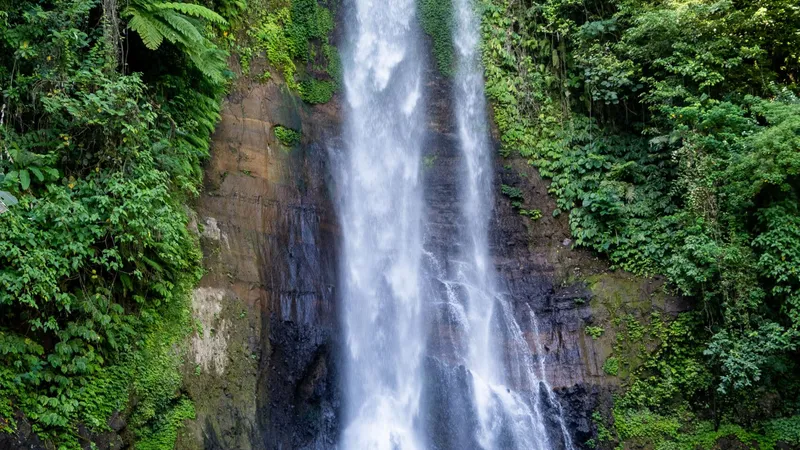
A private Ubud day built around three landmarks: a jungle waterfall, the holy spring temple of Tirta Empul, and the Tegalalang rice terraces. You choose a six-hour run…
- Tegalalang rice terraces, the tiered valley Ubud is known for
- Tirta Empul — the holy spring temple where Balinese still come to bathe
- Ubud waterfall stop with swimming time
- Private car and driver-guide; six-hour or full-day option
 from $29
 Ubud: Private Scenic Waterfalls & Rice Terraces Tour
Experience Ubud's most stunning waterfalls — Tegenungan, Tibumana, and Tukad Cepung — plus the iconic Tegalalang Rice Terrace on a private guided tour. Discover Bali's most celebrated natural…
- Three waterfalls: Tegenungan, Tibumana & Tukad Cepung
- Tukad Cepung — the legendary cave waterfall with light beams
- Tegalalang Rice Terrace panoramic viewpoint
- Fully private — just you and your guide
What Tibumana Waterfall Is
Tibumana is a single-drop waterfall, reported at roughly 20 meters though that figure comes from a single unverified source, falling into a pool wide and calm enough for a proper swim. It's the quietest of the four major waterfalls near Ubud: less crowded than Kanto Lampo on most days, less crowded than Tegenungan by midday once the tour buses arrive, and quieter than Banyumala and Taman Sari as well. Where Tukad Cepung sells a light effect and Tegenungan sells scale, Tibumana sells calm water and comparatively few other people in it.
The setting is a narrow river valley, walled in by palm trees and dense undergrowth, so the falls stay out of sight until the path opens onto them at the last turn. There's no viewing platform to hang back on here; the pool sits right at the base of the drop, and most visitors are in the water within a few minutes of arriving rather than photographing from a distance first.
Tibumana Quick Facts
Here's the short version before the longer sections below.
| Detail | Tibumana Waterfall |
|---|---|
| Hours | 7:00 AM to 6:00 PM, daily |
| Entrance fee | Around 25,000 IDR per person, cash only (has ranged 15,000-25,000 IDR) |
| Parking | 5,000 IDR for motorbikes, 10,000 IDR for cars |
| Locker rental | 5,000 IDR |
| Drive from Ubud | About 40 to 45 minutes, roughly 14 kilometres (about 9 miles) |
| Walk in | 10 to 15 minutes each way, about 500 meters (0.3 miles) |
| Swimming | Yes, in the pool; a lifeguard is on duty |
Getting to Tibumana Waterfall
From Ubud
Tibumana sits about 14 kilometres east of central Ubud, roughly 9 miles, a drive of around 40 minutes, sometimes closer to 45 minutes, by car or scooter on roads that wind through rice fields and small villages.
From Seminyak, Canggu or Kuta
From Canggu, plan on about 1.5 hours in the car. From Seminyak the distance runs close to 30 miles, roughly 1.75 hours, and from Kuta it's a similar 30 miles at around 1.5 hours, since both routes cross most of southern Bali before reaching Ubud's eastern edge. Traffic around Denpasar's outskirts is the variable that stretches or shrinks these times the most, so a mid-morning departure from the south often runs longer than a 7 AM one.
Given the drive, most visitors from the south pair Tibumana with other stops rather than making the trip on its own, and a driver who already knows the road cuts real time off the day and knows which route avoids the worst of the Denpasar bypass traffic.
From Sanur
From Sanur the drive runs close to the same length as from Seminyak or Canggu, since all three start on the same side of southern Bali. Budget around 1.5 hours, and leave before mid-morning if you want to land inside the quiet 7:00 to 9:00 AM swimming window described below rather than arriving once the pool has already filled in.
From Ngurah Rai Airport
The airport adds roughly the same drive as Seminyak or Kuta, since all three sit close together on Bali's southern tip; figure on 1.5 to 2 hours depending on the time of day and how the airport road is running. As with the other waterfalls in this guide, almost nobody drives here directly from the terminal. Most visitors settle into a hotel first and treat Tibumana as a day trip once the rest of the itinerary is set.
The Parking Area on Arrival
The lot at Tibumana sits right by the ticket booth, small and shaded, with room for a mix of scooters and cars though it can feel tight when a tour van or two are parked at the same time. An attendant is usually on hand to point new arrivals into whatever space is free. It fills up fastest between 9:00 and 11:00 AM once moderate crowds and the first tour groups overlap; before 9:00 AM there's rarely any trouble finding a spot close to the entrance.
Scooter, Car, or Driver
A scooter is the simplest way in if you're already comfortable on Bali's smaller roads, since parking is easy and you can leave whenever the pool starts to feel crowded rather than waiting on anyone else's schedule. A car works fine too, though the lot is small enough that arriving during the 9:00 to 11:00 AM window can mean circling for a spot. Hiring a driver removes that problem and adds someone who already knows the quiet hours, which matters here more than at a big, always-busy waterfall like Tegenungan, since Tibumana's whole appeal depends on timing your visit before the crowd builds.
Fees, Facilities and What You're Paying For
Current listings put the entrance fee at 25,000 IDR per person, cash only at the gate; older guides cite 15,000 to 20,000 IDR, so treat the number as one that moves and bring a little extra rupiah just in case. You'll also pay a parking fee at the gate: 5,000 IDR for a motorbike, 10,000 IDR for a car. If you want to leave your bag somewhere dry while you swim, a locker at the site rents for 5,000 IDR.
Last verified: August 2026.
What the Fee Covers, and What It Doesn't
The entrance fee covers access to the path, the falls and the pool, along with the basic facilities on site. It doesn't include a towel, a guide, or food, and it doesn't include the locker, which is a separate 5,000 IDR if you want one. Nothing about the ticket changes if you only stay ten minutes versus two hours; there's no timed entry, so once you're in you can stay as long as the site is open.
If you're on a guided tour, check what the tour price already bundles in before paying again at the gate: some private drivers cover the entrance fee as part of the day, others expect you to pay it yourself on arrival, and it's a five-second question worth asking before you get in the car rather than sorting out at the ticket window.
Cash, the Nearest ATM, and Tipping
The gate takes cash only, and the nearest ATMs sit back toward the main road rather than at the waterfall itself, so sort out rupiah before you arrive. Tipping isn't expected at the entrance or from the lifeguard, though it's common courtesy to tip a driver-guide directly at the end of a private tour rather than at any point during the visit itself. We haven't come across the kind of freelance photo touts that show up at Tukad Cepung; Tibumana draws a quieter crowd and doesn't have the same informal photo-service culture around the entrance.
Facilities
Tibumana has a changing room and toilets near the base of the falls, lockers for 5,000 IDR, and a scatter of warungs and small food vendors around the parking area and along the path in, enough for a cold drink or a simple plate after you dry off. The changing room is basic, a curtained stall rather than a full bathhouse, so pack a sarong or towel to wrap up in front of it if you'd rather not queue. None of the facilities are elaborate, which fits the overall character of the place: this is a working village waterfall with just enough infrastructure added to make a visit comfortable, not a resort-style attraction.
The Walk Down: Stairs, Bamboo Bridges & Difficulty
From the parking area, the walk to the falls takes about 10 minutes, sometimes 15 minutes, each way, roughly 500 meters or about 0.3 miles, along a mix of manicured walkways, bamboo bridges, and concrete stairs that turn slippery when wet. None of it is technical, but grippy shoes matter more than the photos let on. The path drops gradually through rice paddies and coconut palms before the sound of the falls reaches you.
Families manage the walk without much trouble, though the return climb after a swim, in wet sandals, is the part people underestimate.
Are the Bamboo Bridges Slippery?
The bamboo slats actually grip better underfoot than the concrete stairs do, since the surface has some texture to it rather than being smooth. Where they catch people out is the flex: the bridges move slightly with your weight, and if the wind is blowing spray or a light rain across them, the damp bamboo gets noticeably slicker than it looks. Cross at a normal walking pace rather than rushing, keep a hand free for balance if you're carrying anything, and treat bare feet on a wet bridge the same way you'd treat the concrete stairs, as a place to slow down rather than hurry through.
First-Time Visitor Mistakes at Tibumana
The most common mistake is arriving mid-morning expecting the quiet, empty pool from the photos, not realizing that the calm shots online were almost certainly taken before 9:00 AM. The second is wearing flip-flops for the walk and finding out on the return climb, wet and tired, why grippy sandals get recommended so often. The third is leaving valuables loose on a rock at the pool's edge rather than paying the 5,000 IDR for a locker, an easy way to lose a phone or a wallet to the water or to a moment's inattention.
The fourth is treating the changing room like a full facility with showers and soap, when in reality it's a basic curtained stall, fine for swapping into dry clothes but not much more.
Swimming at Tibumana Waterfall
Yes, and this is the main reason to come. The pool at the base is calm and open enough for a real swim, not just wading, and a lifeguard is on duty during the day with signage marking which zones are safe. The one spot to avoid is directly beneath the falls themselves, where the force of the water and the risk of falling rock make it a bad place to linger, guarded zone or not.
Away from that immediate drop zone, the water is calm enough to tread, float, or swim laps across, and the current is mild compared with a river waterfall of similar size.
Depth, Floor and Current
In our experience the pool is deep enough in the middle for an adult to comfortably tread water without touching the bottom, with the floor rising toward a shallower, rockier edge where non-swimmers and kids can stand. Away from the base of the fall, the current is closer to a gentle circulation than a real pull, easy for an average swimmer to handle. Right at the point where the water lands, the movement is stronger and less predictable, which is exactly the zone the signage and the lifeguard steer people away from.
Water shoes help on the rockier sections of the floor near the edges, since a few stones underfoot are uneven, and they're worth wearing into the water itself rather than leaving on the bank if the shallow entry point bothers your feet.
Why It Stays Quiet, and When That Stops
Tibumana stays quieter than Tegenungan or Kanto Lampo largely because it isn't the first name most visitors search for, and because the walk in filters out anyone unwilling to spend ten to fifteen minutes on foot. Early in the morning, before the pool fills in, you can often swim the full width of it without bumping into another visitor. That changes gradually rather than at one fixed moment: crowds start building around 9:00 AM, become moderate through mid-morning, and by the time tour groups arrive after 11:00 AM the quiet, near-empty version of the pool is gone for the day.
If a genuinely quiet swim is the goal, treat 9:00 AM as the real cutoff, not a soft suggestion.
The Swim, Minute by Minute
Most visitors are in the water within five minutes of reaching the pool, since there's no viewing platform pulling you toward photos first. A typical swim stop runs 30 minutes to an hour, longer for anyone who's arrived early and has the pool mostly to themselves, shorter once a tour group turns up and the water starts to feel busier. Add the 10 to 15 minute walk in and the same coming back out, and a full visit runs about an hour to an hour and a half door to door, closer to two hours if you're also using the changing room and grabbing something from a warung on the way out.
People who arrive right at 7:00 AM opening tend to stay the longest, since they're not racing a growing crowd the way a 10:00 AM arrival is.
Photo Etiquette and Sharing the Pool
Because the pool is small enough that everyone in it shares the same view of the falls, a bit of etiquette goes a long way once more than a few people are in the water at once. Give whoever is closest to the falls a minute to get their photo before wading into the same frame, and expect the same courtesy in return once it's your turn. The lifeguard's job is safety, not crowd management, so timing your own photos around other visitors rather than around the lifeguard's signage is on you.
None of this matters much before 9:00 AM, when the pool is at its quietest; it becomes more relevant as the morning goes on and more people arrive at once.
Best Time and Season to Visit
Arrive between 7:00 and 9:00 AM for the quietest water, before moderate crowds build between 9:00 and 11:00 AM and tour groups start showing up closer to 1:00 PM. Think of it as three stretches: 7am and 8am are close to empty, 9am starts filling in, and by 11am the tour groups are steadily arriving. Midweek mornings run quieter than weekends year-round, and a light rain the night before tends to thin out the crowd the next day without necessarily clouding the water, so don't rule out a visit just because the forecast looked damp overnight.
Wet Season vs. Dry Season
The dry season, April through October, gives the most reliable swimming conditions and the clearest water, with the pool running closer to turquoise on a bright day. A secondary seasonal cascade also appears during and just after the rainy season, adding a second flow of water to photograph even if it's not the main event. In the wet season, November through March, heavier rain upstream can turn the water browner and raise the flow, and on the heaviest rain days the site or the path can close as a precaution, similar to the other waterfalls in this guide.
Conditions usually settle again within a day; check locally rather than assuming a single storm rules out the rest of the week.
Nearby Attractions: Taman Sari Waterfall, Goa Garba and Goa Gajah
A handful of sites sit close enough to Tibumana to fold into the same morning without much of a detour. Taman Sari is a smaller, lesser-known waterfall and natural pool a short drive away, quiet even by Tibumana's standards and worth a stop if you want a second swim without the crowds of the bigger waterfalls. Goa Garba is a river-carved cave and bathing spot in the same stretch of countryside, a good option for travelers who liked the canyon setting at Tukad Cepung but want somewhere with fewer visitors.
Goa Gajah, the Elephant Cave, is the better-known stop of the three, an ancient rock-cut sanctuary with carved reliefs and bathing pools that predates most of Bali's temples still in use today; it sits closer to Ubud than Tibumana does, so many day plans visit it on the way out or back rather than as a dedicated trip. None of the three needs a full separate day, and a driver familiar with the area can string two or three of them together around the waterfall stop.
The Village and Countryside Around Tibumana
The road in from the main highway narrows down through a stretch of rice paddies and small family compounds before reaching the parking area, the kind of drive that's part of the appeal rather than something to get through quickly. There's no real town at Tibumana itself, just the cluster of warungs at the entrance; the closer village centers, with small shops and a proper choice of places to eat, sit back toward the main road rather than at the waterfall. If you're coming through on a Balinese ceremony day, it's not unusual to see a procession or offerings being carried along the road, and slowing down and giving way is the expected courtesy.
None of this needs planning ahead, but it's worth knowing the drive itself is rural and can feel slower than the map distance suggests, especially behind a truck or a ceremony on a single-lane stretch.
Tibumana vs. Tegenungan vs. Kanto Lampo vs. Tukad Cepung
Of the four, Tibumana is the quiet one and the best for actually swimming. Tegenungan is the biggest and busiest, especially by midday once the buses arrive, with an easy paved walk to a wide pool. Kanto Lampo is the photogenic tiered curtain most people have already seen online, better suited to photos than a swim. Tukad Cepung is the cave waterfall, chasing a light beam rather than a pool, and the only one of the four where you wade through a river to get there instead of swimming once you arrive. If your day only has room for one waterfall and you want to actually get in the water without fighting a crowd for space, Tibumana is the one to pick.
| Waterfall | What It Is | Swimming | Crowd Level |
|---|---|---|---|
| Tibumana | Single curtain into a calm pool | Yes, the best of the four for swimming | Quietest, moderate after 9:00 AM |
| Tegenungan | Wide cascade into a big open pool | Yes, easy swimming | Busiest, worse by midday |
| Kanto Lampo | Tiered curtain down a black rock face | Yes, between the tiers | Moderate |
| Tukad Cepung | Cave waterfall with a light beam | Shallow wading only | Moderate, tied to the 9-11 AM light window |
What Pairs Well With Tibumana
Tibumana pairs cleanly with Tegenungan if you want a contrast between quiet and busy on the same morning, since both sit on a similar line east of Ubud and the drive between them doesn't add much backtracking. It also pairs well with Tukad Cepung, close enough that a single driver can cover both before lunch, useful if photography matters as much as swimming and you want to catch the 9:00 to 11:00 AM light window at the cave before or after a swim here. Kanto Lampo sits further off to the north near Gianyar, which makes a same-day pairing with Tibumana more of a stretch than a natural loop; it works better folded into a different day built around that side of the region instead.
Where Is Tibumana Waterfall?
Tibumana sits in a quiet river valley east of Ubud.
Tibumana Waterfall: Frequently Asked Questions
Is Tibumana Waterfall worth visiting?
Yes, especially if swimming matters to your day. The pool is calm, a lifeguard is on duty, and it's consistently the quietest of the major Ubud-area waterfalls, particularly if you arrive before 9:00 AM.
How long is the walk to Tibumana Waterfall?
10 to 15 minutes each way from the parking area, about 500 meters over walkways, bamboo bridges and concrete stairs that can be slippery when wet.
Which waterfall is better, Tibumana or Tegenungan?
It depends on what you want. Tegenungan is bigger, easier to reach, and busier, especially by midday. Tibumana is quieter, smaller, and better for an actual swim without fighting a crowd for pool space. Many guided waterfall tours visit both in the same day, so you don't have to choose.
How much is the entrance fee at Tibumana Waterfall?
Around 25,000 IDR per person, cash only, though the figure has ranged 15,000 to 20,000 IDR in older listings, so bring a little extra. Parking adds 5,000 IDR for a motorbike or 10,000 IDR for a car. Last verified: August 2026.
What are the opening hours of Tibumana Waterfall?
7:00 AM to 6:00 PM, daily.
Can you swim at Tibumana Waterfall?
Yes, the pool at the base is calm enough for a real swim, with a lifeguard on duty and signage marking safe zones. Stay out of the water directly under the falls, where the force of the drop and the risk of falling rock make it unsafe.
How do I get to Tibumana Waterfall from Ubud?
It's about 40 to 45 minutes by car or scooter, roughly 14 kilometres east of central Ubud.
Is there parking at Tibumana Waterfall?
Yes, at the entrance, for 5,000 IDR for a motorbike or 10,000 IDR for a car.
Is Tibumana Waterfall suitable for kids?
Generally yes. The walk in is a manageable 10 to 15 minutes on stairs and bamboo bridges rather than a scramble, and the pool has shallower water near the edges where non-swimmers can stand. Keep a close hand on younger kids near the falls themselves, where the current and the risk of falling rock are the real hazard, not the swim in general.
How crowded does Tibumana get during high season?
Even in high season, Tibumana stays noticeably quieter than Tegenungan or Kanto Lampo, since the walk in filters out casual visitors. It does fill in through the late morning and early afternoon once tour groups arrive after 11:00 AM, so high season mainly shortens the quiet window rather than eliminating it; arriving by 8:00 AM still gets you a mostly empty pool most days of the year.
Most people who ask us which Ubud waterfall to visit already have Tegenungan or Kanto Lampo in mind, since those are the ones that show up first in searches. We usually point them to Tibumana instead, or alongside, because it delivers the thing a waterfall photo can't: an actual swim, in calm water, without elbowing for space. Get there before nine and you'll understand why within the first five minutes.